The clinic smelled like ozone and antiseptic. Dr. Reeves didn’t smile when she explained the terms.
“You understand this is permanent,” she said, stylus hovering over the tablet. “The vocal cord restructuring can’t be reversed. Not with current technology.”
I nodded. I’d been nodding for six months, ever since I first saw him at the gallery opening in the Upper District. Sebastian Laurent, heir to the Laurent pharmaceutical empire.
He moved through that marble-floored space like he owned gravity itself.I was serving champagne. He didn’t see me.”
And you’ve read the side effects. Chronic pain in the lower extremities. Most patients describe it as walking on broken glass. For some, it diminishes over time. For others…” Dr. Reeves shrugged. “We’re still collecting data.”
“I understand.”
The Ascension Program wasn’t advertised openly. You had to know someone who knew someone. It promised complete social integration into the Upper District. New identity, new body composition that would pass their bioscanners, pheromone adjustment to smell like you belonged. The works.
But voices carried class markers that body modification couldn’t erase. Vowel sounds, rhythm, the unconscious tells of where you grew up.
The only solution was silence. Let them assume you were born to it, too refined to fill the air with unnecessary words.
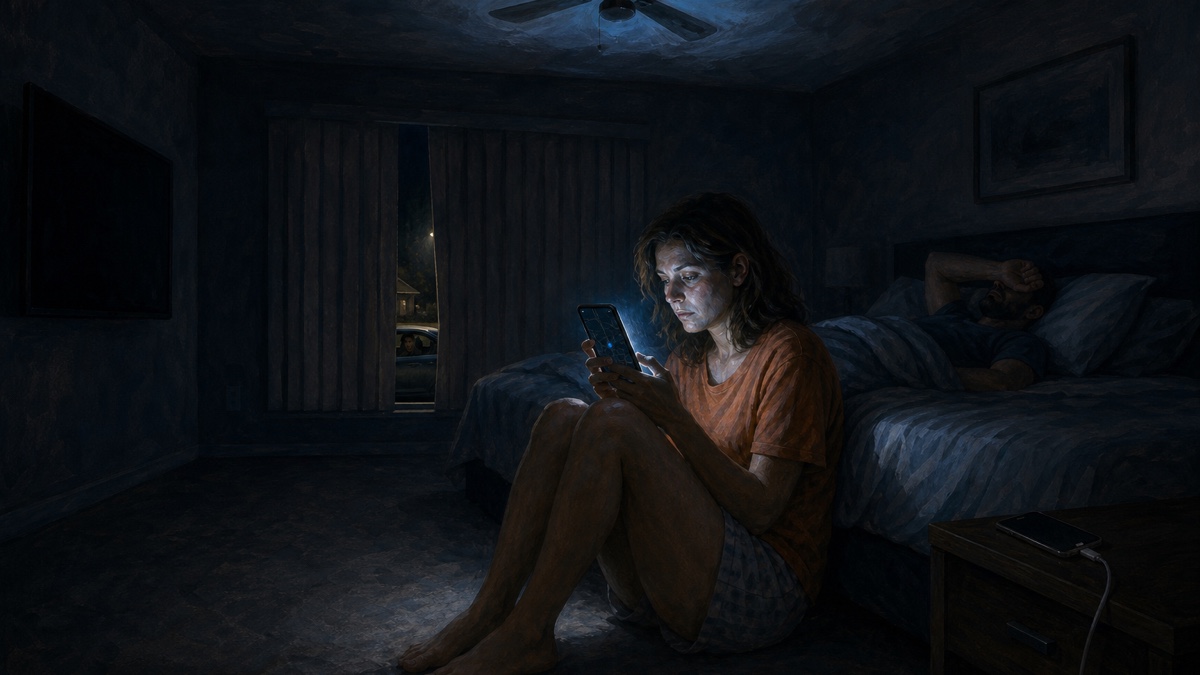
Small price, I thought, watching Sebastian’s social media feeds late at night in my efficiency pod twelve levels below sea level. He collected beautiful things. Art. Wine. People.
I could be beautiful. I could be collected.
The procedure took four hours. When I woke, my throat felt like I’d swallowed ground glass. Dr. Reeves stood over me.
“Try not to scream,” she said. “When the pain starts.”
She meant well.
—-
The first steps were the worst.
They’d restructured something in my legs during the body modification. Skeletal adjustments to add three inches of height, to change my gait into something that suggested ballet training, equestrian lessons, a childhood on solid ground instead of the floating slums.
Each step felt like the bones were splintering and reforming. Like walking on knives that grew sharper with each footfall.
But I walked. Through the lobby of the Laurent Tower. Through the gardens where Sebastian hosted his famous garden parties.
I wore clothes that cost more than I used to make in a year, bought on credit extended to all Ascension graduates.
An investment in our new lives.
He noticed me at the third party.
“You’re new,” he said, and his smile was warm, curious. “I know everyone. I don’t know you.”
I smiled back. Nodded. Gestured gracefully with one hand. The universal language of the comfortably mute, those who simply chose not to speak because they had nothing to prove.”
Mysterious,” he said. “I like that.”
—-
Six months. That’s how long I had him.
I learned to communicate in touches, in handwritten notes on expensive stationery, in the arch of an eyebrow. He taught me to appreciate wine I couldn’t taste properly anymore (another side effect, the vocal modification affected my palate). We attended openings. Benefits. His world.
Every step still felt like knives. I learned to walk through it, to let it show only in a certain graceful fragility that he found charming.
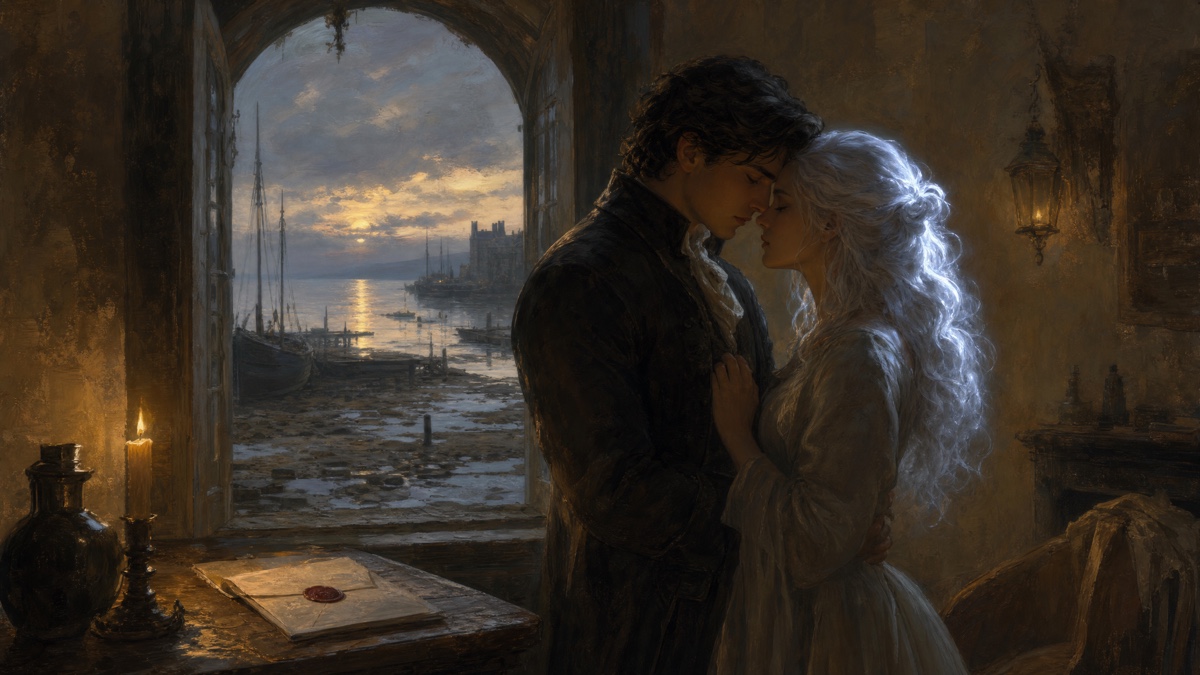
“You’re like a creature from the deep,” he told me once, fingers tracing my spine. “Something that crawled up from darkness into light.”
He had no idea how right he was.
I met Clarissa at the winter gala. Blonde, laughing, effortless in ways I would never be. Her voice carried across the ballroom. Cultured, confident, born to this. She touched Sebastian’s arm with easy familiarity.
“We went to primary together,” he explained later. “She’s been in Paris for years. Just moved back.”
I watched them together over the next few weeks. Watched her fill the spaces I couldn’t. Watched him light up when she spoke, really spoke, about art and philosophy and family histories that stretched back generations.
I left notes. He responded with distraction, apology, the gentle pulling away of someone who hasn’t quite decided to end things but has already emotionally departed.
The day he announced their engagement, I stood in his apartment while they celebrated below. I could hear Clarissa’s laugh through the floor.
Dr. Reeves had mentioned this, too, buried somewhere in the consent forms. Most people who went through Ascension didn’t make it past the first year. The pain, the silence, the constant pretending. Something always broke.
Some just disappeared.
I walked to the balcony. Forty stories up. Below, the sea churned against the pylons that held the Upper District above water. Farther out, the floating slums where I’d grown up bobbed in the dark.
The pain in my legs had never stopped. Not for a single moment. Every step a reminder that I’d carved away pieces of myself thinking it would be enough.
Nothing had been enough. Nothing would ever be enough.
I climbed onto the railing. The wind whipped my hair. Expensive hair, styled by expensive people, framing a face that had been restructured to fit their beauty standards.
My father used to call me his little mermaid when I was small. Before the floods took him. Before Mom started working three jobs in the Upper District kitchens and coming home too tired to remember she had a daughter.
“Ariel,” he’d say, watching me swim between the floating platforms. “You’re going to see the world above someday.”
He meant it as hope. As promise.
I’d made it above. I’d walked on land. I’d loved a prince.
And now I understood what the fairy tale never said out loud. The little mermaid didn’t just lose her voice and gain legs. She lost her sisters. Her family. Her entire world. Everything that made her who she was.
For what? For someone who never really saw her at all.
Below, the water looked almost soft in the moonlight.
They say when you give up everything to join a different world, when you sacrifice your voice and walk through knives for love, you don’t drown when you finally return to the water.
You just dissolve. Become foam. Become nothing.
I stepped off to find out.