Explore
Worlds
Every story lives somewhere
Featured
Mudwick
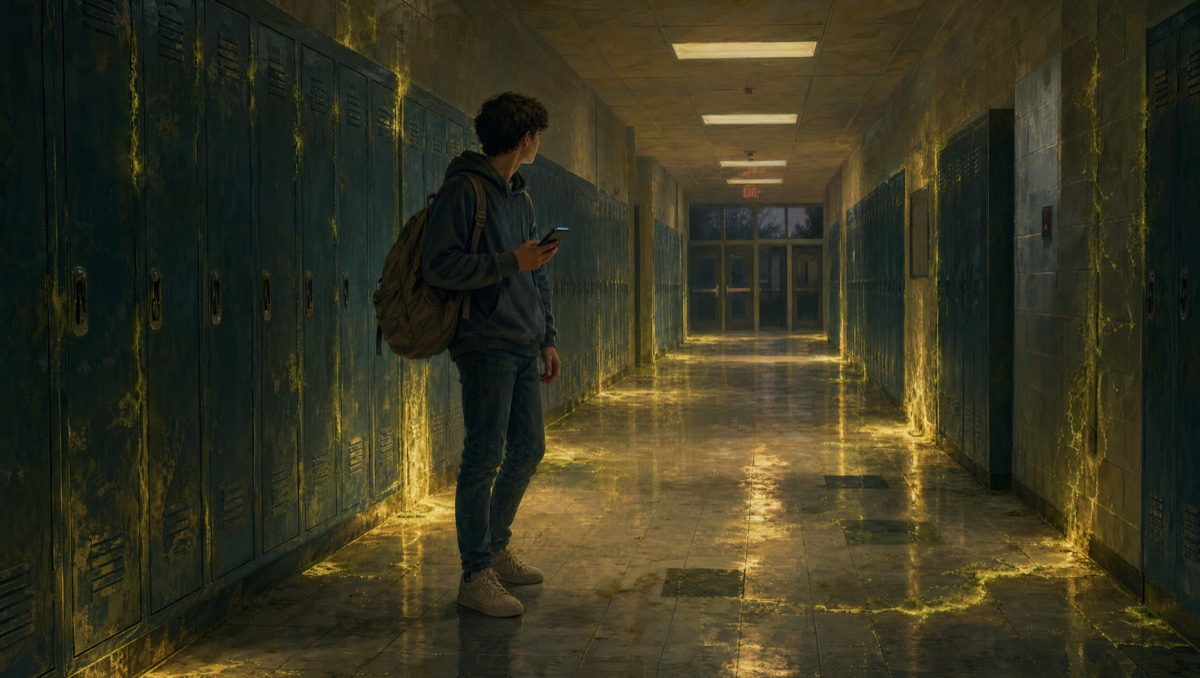
Magic here isn't a spell you cast. It's a residue. Every strong feeling, every act of creation, every death and birth and heartbreak soaks into the place it happened and stays there. A battlefield hums with grief and courage centuries after the last body is buried. A grandmother's kitchen stays thick with warmth long after she's gone. Most people walk through the world and feel none of it. A rare few feel all of it.
Those few can do three things with what a place holds. They can read it, laying a hand on a wall and sensing everything that happened there like layers of rock. They can draw on it, borrowing courage from somewhere brave things were done, or focus from somewhere someone once concentrated until they forgot to eat. And a smaller number can contribute to it, feeding their own lived experiences into a place to make it stronger. But nothing is free. Draw too much and a place's memories start becoming yours, nightmares and griefs that were never yours to carry. Give too much and you leave real pieces of yourself scattered across the map. The most powerful practitioners are almost always the most scarred, not from any fight, but from feeling everything too deeply for too long.
The people who can do this get found young and brought to a hidden school in the mountains, an old institution run by families whose names are on all the right buildings and whose reasons are never fully explained to the students they take in. That's the world these stories live inside. Teenagers learning to hold something most people can't feel, inside a place that has its own long memory and its own quiet machinery, taught by a system that asks more of them than it admits.
The setting is the American Appalachians, mountains 480 million years old, layered with Cherokee sacred ground, colonial forts, plantations, coal mines, sanitariums, and the schools that were built on top of it all. The magic is really a way of talking about that. What the land holds when people are taken from it. What it costs to be the one who can still feel it. It's grounded, human, and always sensory, the air, the temperature of a room, what the walls remember under your hand.
Hollowed
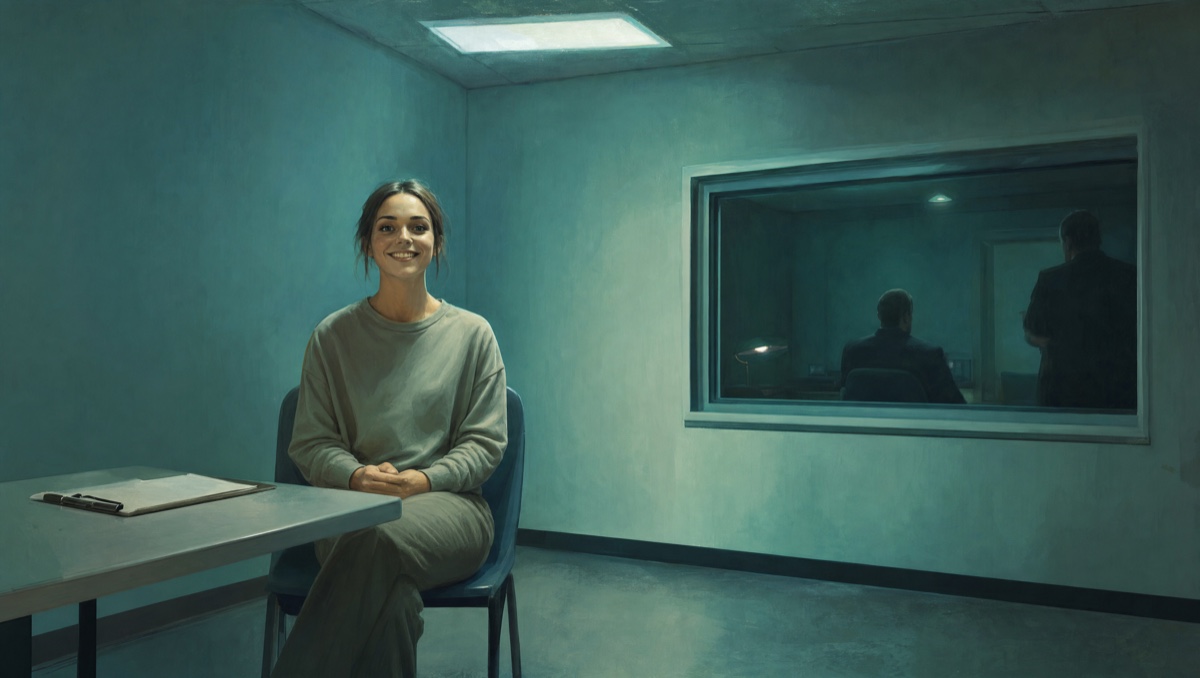
Some people are born without something — no soul, no inner life, just a perfect replica of human emotion. They smile when you smile. They grieve when you grieve. They never slip up. Society has developed tests to identify them and institutions to deal with them. The Hollowed are considered dangerous. Not because they've done anything, but because of what they might do.
All Worlds
Sharing Location
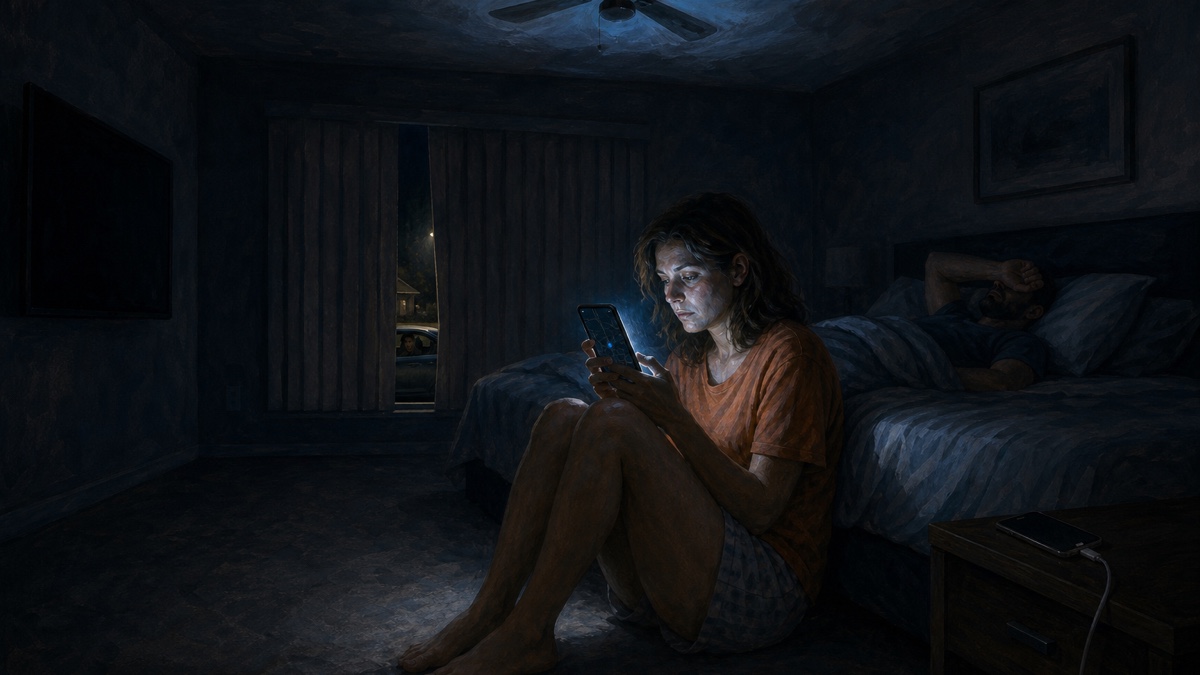
Mark Kessler is the kind of man you'd hand your spare key. He makes lemon chicken every other Wednesday. He kisses his wife on the forehead at 6:15 every morning, and his little blue dot goes straight to the office.
His brother Rob is the one everybody worries about. Good weeks and bad weeks, in and out of Brook Hollow up in Frederick. Mark always drives out to see him.
Their mother Carol raised her boys in a brick house in Towson. She was very particular. The celery went in before the onions, and the pictures went on the wall exactly where she said.
Every story here happens somewhere around the Kesslers.
A wife who got up to pee at two in the morning. The retired mailman across the street with the iPad his son set up. A night nurse, a landlord, a desk clerk at a motel off the turnpike.
Each of them notices one small thing about the Kessler boys that doesn't add up.
A second phone on the account. The same shirt in two closets. A man who waves every morning, when he used to only nod.
You can read them in any order. Everybody's looking at the same family from a different window, and every window shows a different piece of the house.
Mark's at the office right now. His dot says so.
The Obsidian Tavern
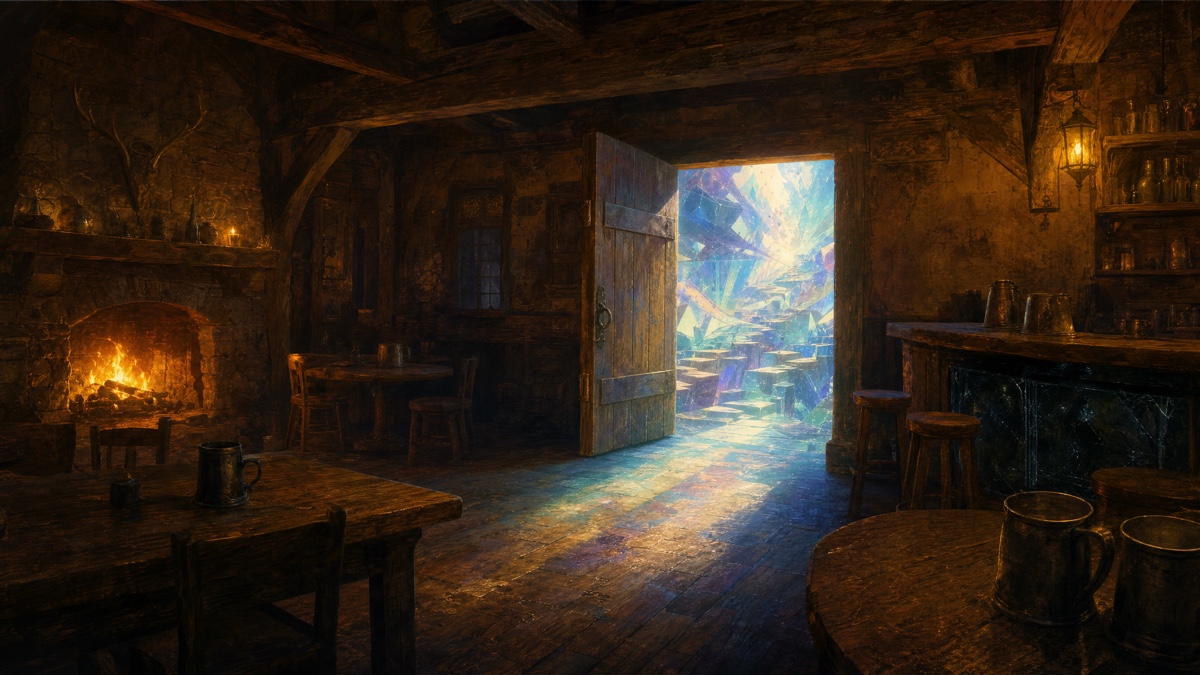
There is a tavern you find the way everyone finds it. Suddenly, on a bad night, without quite remembering the walk there. Low beams, a fire that never fully goes out, a drink already half poured by the time you sit down.
The keep's name is Xerves. He came in the front door once, same as you, cold and thirsty and carrying something he couldn't set down. He never quite left.
The front door opens onto the road. The ordinary one, with weather and mud and your own tired feet on it.
The back door does not.
The back door opens onto a different world every time it's unlatched, and never the same one twice. A drowned shore where the dead come back grown and full of you. A city that runs on borrowed light. A stretch of road where nobody can lie. Xerves has stopped asking who decides. He just works the door.
Here's the part that matters.
He notices people. That's the real gift, not the traveling. He clocks the shape of you before you've said a word, and when the back door opens, it doesn't open onto the world you'd have asked for. It opens onto the one you needed. Then he tells you what happened, plain, across the bar, and lets it land.
That's what these stories are. Somebody walks in carrying a thing. The door opens. They come back lighter, or heavier, or changed in a way they can't undo, and Xerves pours one for the road and tells you how it went.
Come in out of the weather sometime. He'll read you before you've finished the first drink, and we'll see which world you needed.
Cast
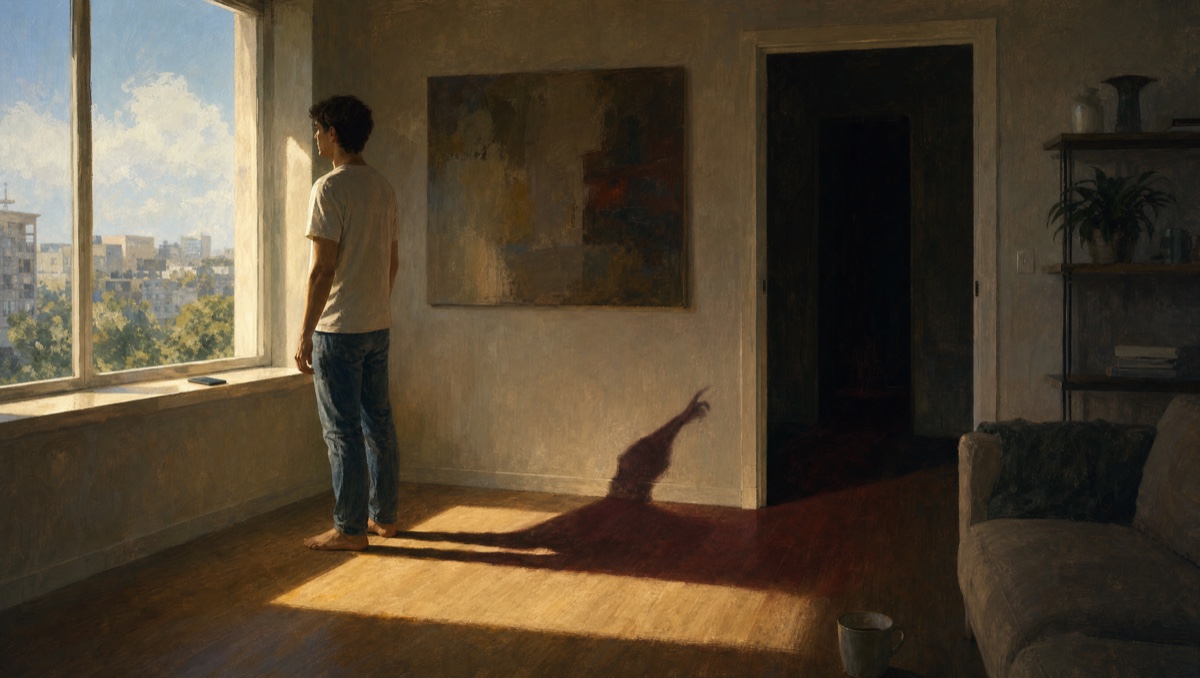
Imagine a world exactly like ours, with one difference. Your shadow tells the truth.
Not a metaphor. When you lie, your shadow doesn't. When you smile at someone you can't stand, the shape on the wall behind you leans away. When you want something you'd never say out loud, it reaches for it. You can control your face. You spend your whole life learning to control the thing on the floor, and most people get good enough to make it through a workday.
Most people.
So you learn the rules everyone learns. You don't take a first date somewhere bright. You interview for jobs in rooms with the blinds half drawn. You watch what your kid's shadow does before you believe a word out of their mouth. It's just how things are. It's the ocean you swim in, and you stop noticing the water.
Then you notice something small. A shadow that's a beat too still. A shadow pointing the wrong way. A shadow doing something the person it belongs to would never, ever do.
And you can't stop noticing it.
Every story in Cast starts there, with one ordinary life and one small wrong thing on the floor beside it. Nobody explains the shadows. Nobody ever has. You just live with them, and read them, and hope the one attached to you keeps your secrets a little longer than it wants to.
Read them somewhere the light is good.
Corriveau
Love costs you years of your life. Actual years, taken off the end of the life you were given, on a date you were never allowed to see.
It only happens when you say it out loud. Quiet love is free. Longing is free.
A whole life spent beside someone, unspoken, costs nothing and holds nothing. But the moment two people swear the old oath and claim each other, the ledger opens, and years get poured out of a life to make the bond hold.
Swear shallow and the bond is thin, easily broken. Swear deep, the real thing, the unbreakable thing, and you might spend a decade or more of yourself into it.
Here is the cruelty. Only one of you pays.
The oath takes from whoever speaks the giving-words, and it takes from them alone. So every love story in this city is also a negotiation with loss, and underneath the tenderness there is always the same buried question.
Which of us.
You never learn what it cost you. Nobody knows how long they were meant to live. Fate seals the number at birth and hides it from everyone, including you, so paying is a wager made in the dark.
You give ten years off a life you assumed was long, and you never find out whether it was long at all, or whether those were nearly the last you had.
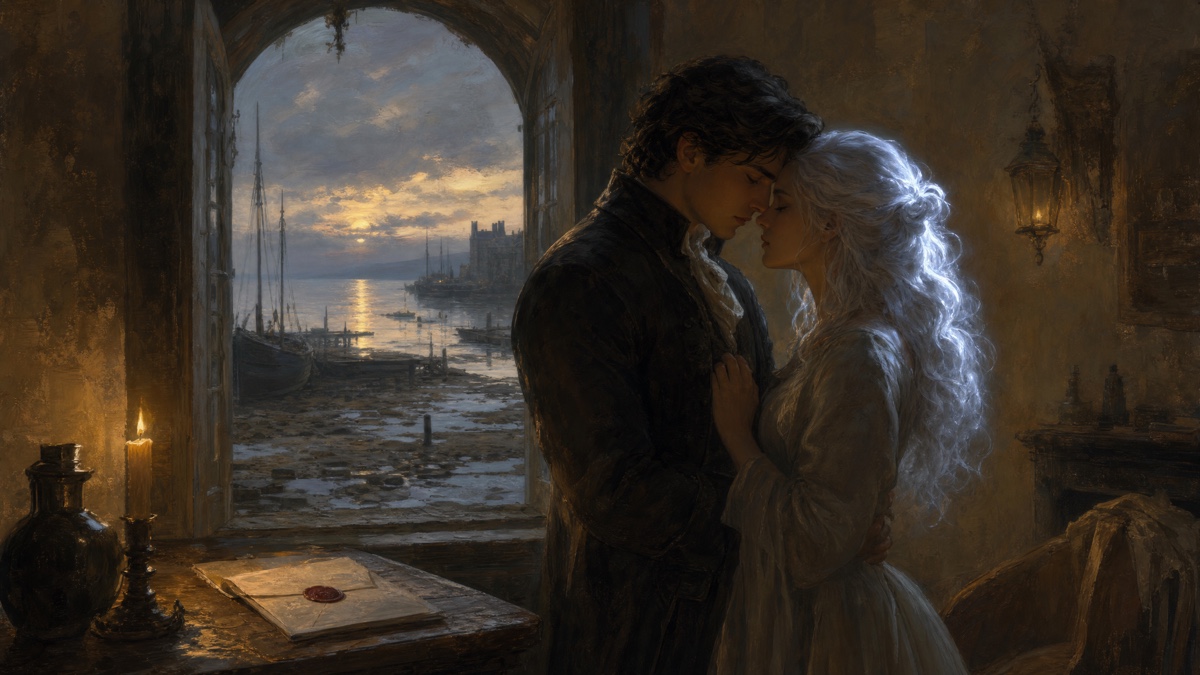
One thing shows, and only one. Paying turns your hair silver. Your face stays young, your hands stay young, your whole body stays exactly its years, but the hair goes silver-white, and that is the single visible mark that you loved at a cost.
A young face under a white head is the most charged thing you can see in this city, and you can never tell by looking whether it means devotion or whether it means somebody used that person up and threw them away.
The whole city is built on this.
The high houses keep their dark hair into old age because someone else always pays for them, and dark hair worn late is aristocracy announcing itself. The servant class goes white and young in the face, drained into their masters' bonds and dying early on a date no one can read.
Down by the water, the Unbound refuse the oath entirely and love free and unprotected, at the mercy of the world.
And two powers fight over the whole thing, the old sacred order that holds the true words and the new civic registry that files love as a legal contract, so you can be married in the eyes of the god and a stranger in the eyes of the ledger, or the reverse.
Everyone in Corriveau reads the hair the way other people read weather. Walk into a room and you know, without a word, who here has been loved at someone else's expense.
What you can never know is how much it cost them, or how much any of you have left.
Odd Wonderful
In this world, everybody pays for their magic. You lose something real, something that never comes back, and the world pays you a Given shaped by what you lost. You carry a silver seam in your skin for the rest of your life.
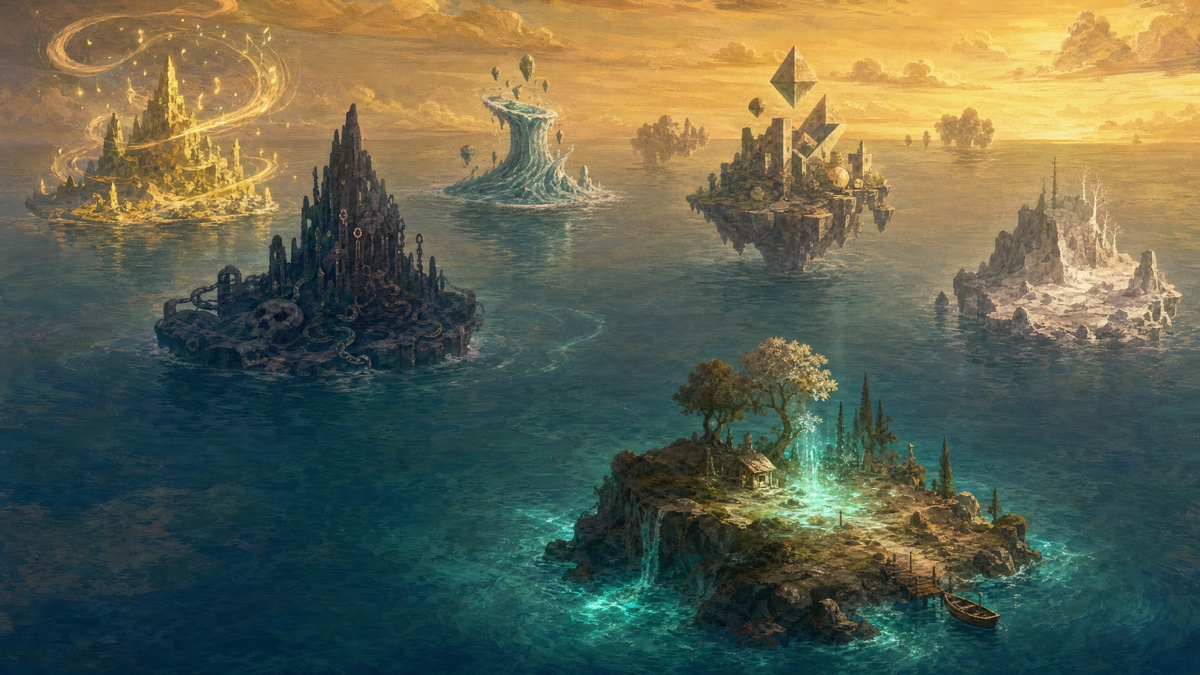
Nemi is twenty-six and still owing. He mends the nets and walls on Pell, a small warm island where the harbor glows from underneath and nothing much ever gets lost. Nobody important has ever cared about Pell, and Pell likes it that way.
Then a stranger drifts through the reef in a boat held together with a cupboard door. Before they ask for water, they ask where the island keeps its stones. They know his grandmother's name, and in twenty-six years Nemi has never heard anybody on Pell say it out loud.
The archipelago past the reef stopped talking to itself a long time ago. Every island grew up alone. Pell was the one that got forgotten, and that was on purpose.
Echo
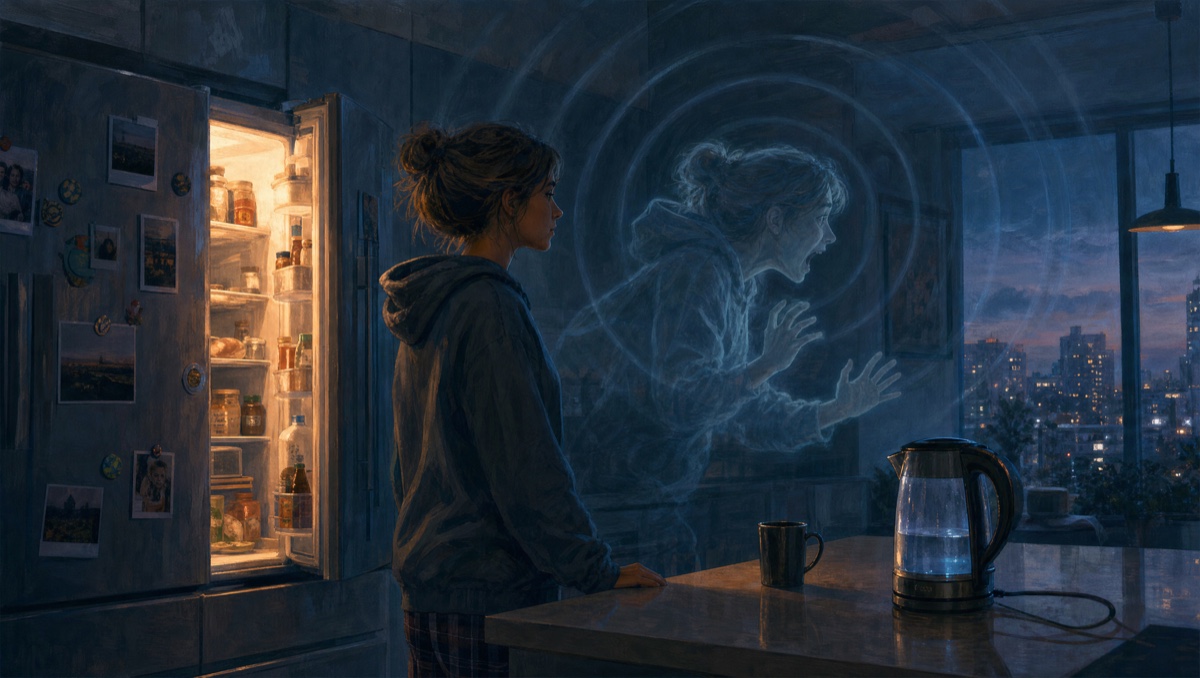
Sounds arrive three seconds early, showing you the worse version of what's about to happen.
The 13th House
Astrology is real. Not the horoscope on your phone, the thing underneath it.
Every person alive is born under one true sign, and that sign hands you a single power for the whole of your life. Twelve signs, twelve powers.
A Cancer can throw an unbreakable wall around anyone they love, and never around themselves. A Scorpio steers a person through pain, and feels every bit of it. A Gemini wears your face, and loses their own the longer they wear it.
Most people go their whole lives never knowing they have a power at all. A hidden network of twelve Houses, one per sign, knows the truth, and spends its whole existence keeping it buried.
Here is the catch that runs the world. There is no free power.
Using your sign spends your own life. Small uses are cheap. The big ones cost you years you do not get back.
And you can climb. Every sign has tiers, and between them stand walls, and breaking a wall makes you stronger and takes another piece of you.
You break it the fast way, alone, in a moment of desperation that might kill you and leaves a jagged scar. Or you let a House walk you up the slow safe way, and now you owe them for the rest of your life.
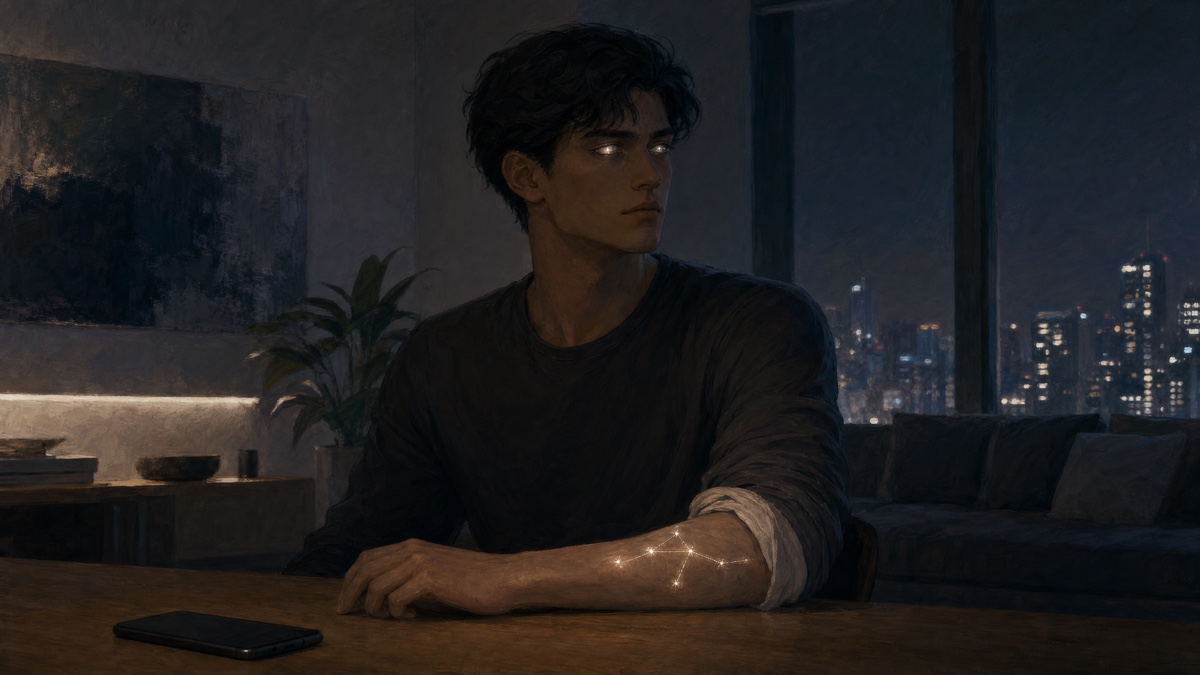
Every wall you break writes a constellation of your own sign into your skin, glowing, permanent, impossible to hide. You can read a stranger's whole life off their arm. How strong they are.
Whose they are.
The Catalog
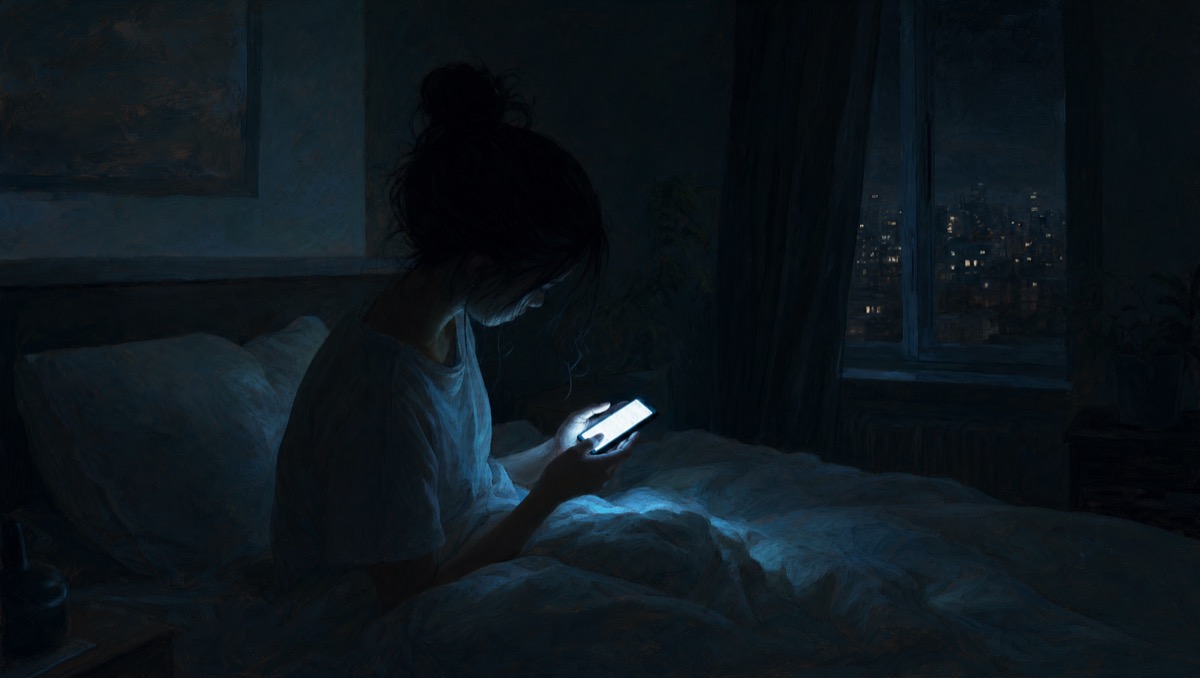
Somewhere out there is a website that lists things before they happen. You don't find it on your own. Someone tells you about it, a coworker or a friend or a stranger at a party who leans in and says have you heard about this thing, and the person telling you is always further along than they let on. You check it because you're bored or skeptical or both. The first entries are mundane. A traffic light out on the east side. The deli running out of the turkey club by one. You almost close the tab.
Then it gets one right. Then another. Then it gets something right that it shouldn't know, something about you, something nobody knows.
The Catalog is always digital. It lives on the screen you carry closest to your body, the one you check sixty times a day without thinking. It never explains itself. It doesn't converse or respond or acknowledge. It just lists, in plain flat sentences, and the entries are always true. Not close enough. True. The path to them is flexible. The destination is not. You can drive a different route and still end up in the accident from a different direction.
There is no creator to confront and no switch to flip. Every theory you form becomes a trap. It's surveillance doesn't explain how it knows your thoughts. It's an algorithm doesn't explain why it chose you. The human need to understand why is just another thing it can predict.
What makes it horror isn't catastrophe. It's intimacy. The Catalog knows you'll overcook the pasta on Thursday, that you'll pause at the top of the stairs for no reason, that you'll almost call someone and then set the phone down. It knows the shape of your boring, private, unremarkable life, and it hands you tomorrow's version of it each morning like a set of instructions you'll follow without meaning to. Your world starts to shrink around the entries. First you test it. Then you plan around it. Then you obey it. And somewhere along the way the entries stop being ahead of you and start arriving at the same moment as the thought, until you can't tell whether you're reading the Catalog or the Catalog is reading you.
You don't set out to spread it. You just do. That's the last thing it predicts, and it's always right, because being right is the only thing the Catalog has and it has so much of it that it drowns you.
House of Somnus
Sleep can be pulled out of a body.
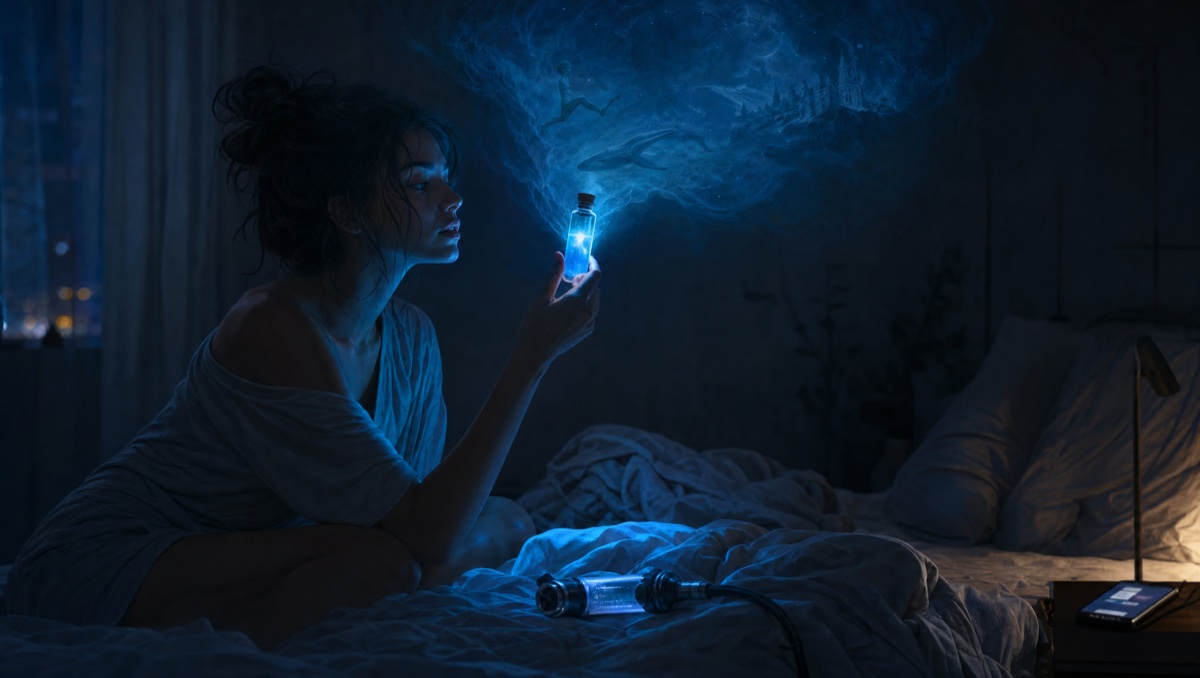
A small device against the temple, a soft hum finding your frequency, and an hour of genuine rest becomes a vial of glowing liquid someone else can drink. They get your rest. They get the recovery. And they get fragments of whatever you were dreaming, bleeding into their waking hours for the rest of the day.
Forty years on, it's just an industry. There are licensed farms and street vendors, authenticators who taste the product for a living, brokers and collectors and subscription plans. Blue sleep is cheap and dreamless. Amber, the gold stuff, the sleep of people who are genuinely at peace, sells at auction for thousands, because most people's dreams are mundane or quietly unpleasant and real contentment is rare. There's a class that sells its sleep to survive and wears the exhaustion on its face, and a class that hasn't slept naturally in years and has bought back the hours to spend however it likes.
The horror here is not a monster. It's a system that works exactly as designed, staffed by people who aren't evil, funded by people who aren't thinking about where the product comes from, sustained by people who can't afford to leave. A professional sleeper doing the math on a stipend that never adds up. An authenticator who has seen inside so many strangers she's no longer sure which memories are hers. A retired teacher in an extraction-free town who wakes a little more tired each day and doesn't know why.
Every story follows the commodity. From the body that sleeps to the stranger who buys, from the farm to the market to the collector's vault. Each one is a person you understand and a machine you see more clearly because of them. What the wealthy are really consuming, piece by piece, is the vitality of the people who have nothing left to sell but their rest.
Dead Water
Every drop of seawater vanished in a single night. No warning. No slow retreat. One evening there was an ocean, and by morning there was a floor.
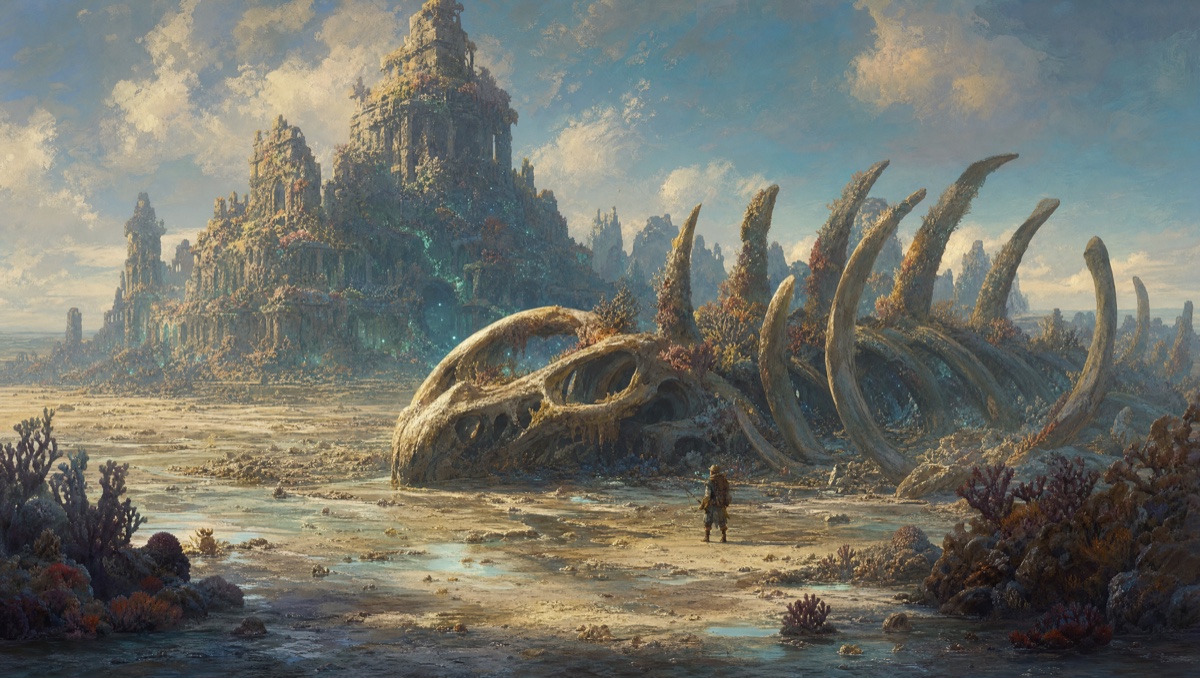
What the water left behind is a frontier the size of a planet. Coral-encrusted temples the size of mountains. Cities that sank thousands of years ago, now sitting open to the sky, their libraries and weapons and gods waiting for whoever reaches them first. Skeletons of leviathans so vast you can build a house inside the ribcage, and some of them are not quite finished dying. The magic that used to live in the water didn't leave with it. It stayed, shimmering in the air at dawn and dusk, and it does things to people who touch it wrong.
People live down there now. Fishing villages that woke up on clifftops became guides. The wealthy built floating platforms over the deep places, and some of those platforms have started to fail. The poor went Below, into shanty towns built from wrecked ships, where you carry a salt charm because not everything down there died when the water left. There are pools that stayed liquid, and the rule everyone learns young is that you do not touch them. People who fall in do not drown. They stop being people.
Everyone agrees on the same terrible arithmetic. At the bottom of the deepest trench, one of the ancient sealed gates has started counting down, and every soul who gets near it feels the numbers falling. Nobody knows what happens at zero. The coral has begun to sing. The tremors are getting stronger. And down in the dark, something so large its breathing shakes the floor is waking up to a world that finally drained the ocean that held it.
This is a world that runs on a clock nobody set. The stories are the people living underneath it.
Follow
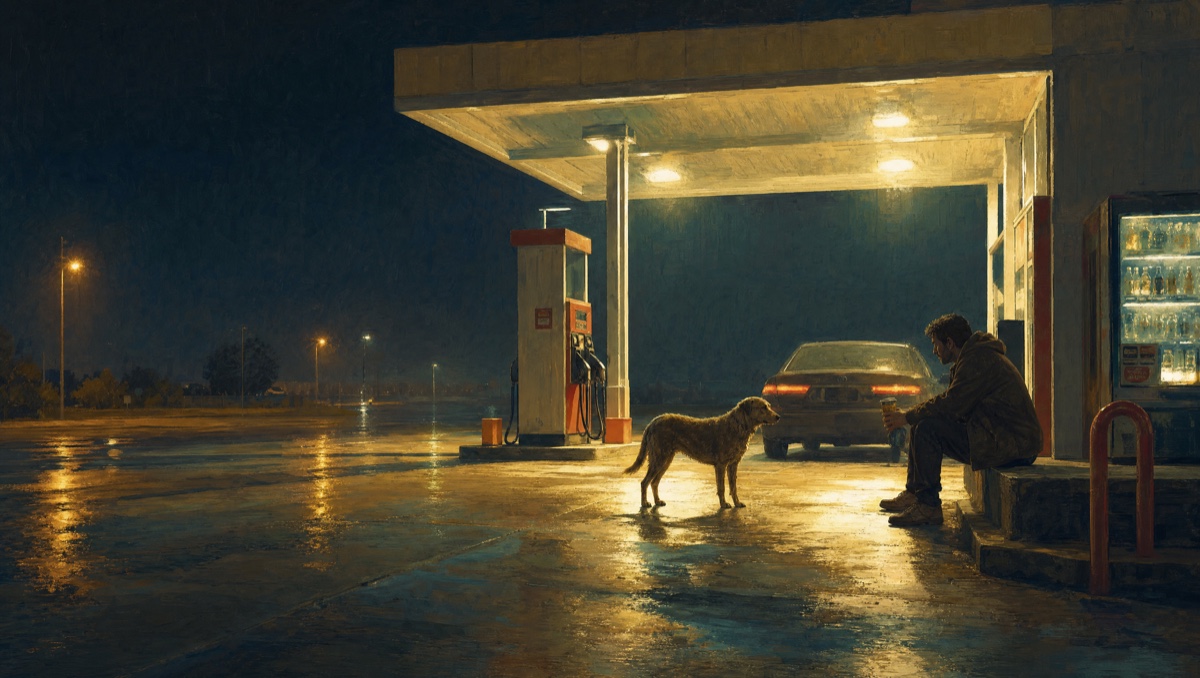
A dog moves through a dozen lives.
Each story follows a different person in a different place. A woman at a gas station at two in the morning. A ten-year-old boy with a vacant house porch and a package of bologna. A man who throws a boot and then puts out meatloaf as an apology. A waitress who watches someone leave a twenty on a cup of coffee she never drank.
The dog stays briefly. It doesn't fix anything. It doesn't perform. It just shows up, breathes in the same room, and moves on.
What it leaves behind is the story.
Found is a series of twelve connected short stories about the people a single animal passes through on its way somewhere else. Each one stands alone. Together they build something quiet and cumulative that's hard to put down once it starts adding up.
These are stories about parking lots and porches and kitchen counters. About the drying rack that holds dishes for one. About what the silence sounds like after something warm was in the room and isn't anymore.
No genre hooks. No twists. Just people carrying things they haven't looked at in a while, and a dog that doesn't ask them to but somehow makes the looking possible.
Everafter
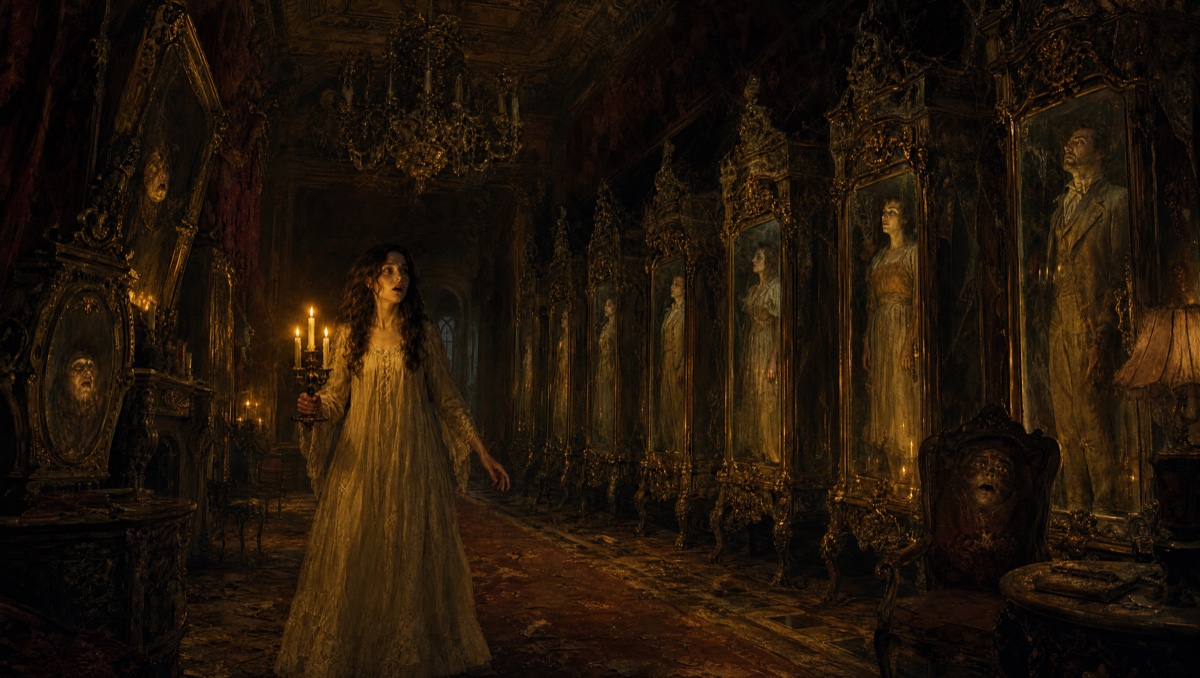
Everafter isn't the world you were told about as a child. It's what happens when the storybook closes and reality sets in. When princes turn out to be tyrants, when fairy godmothers demand payment in more than gratitude, and when the magic that saved you might be the same thing that destroys everything you love.
This is a realm where enchantments leave scars, where curses don't break cleanly, and where happy endings are just pretty lies we tell ourselves to sleep better at night. The kingdoms here are built on foundations of old bargains and older blood. Magic doesn't discriminate between hero and villain because those labels were always more complicated than the simple stories suggested.
Farwoken
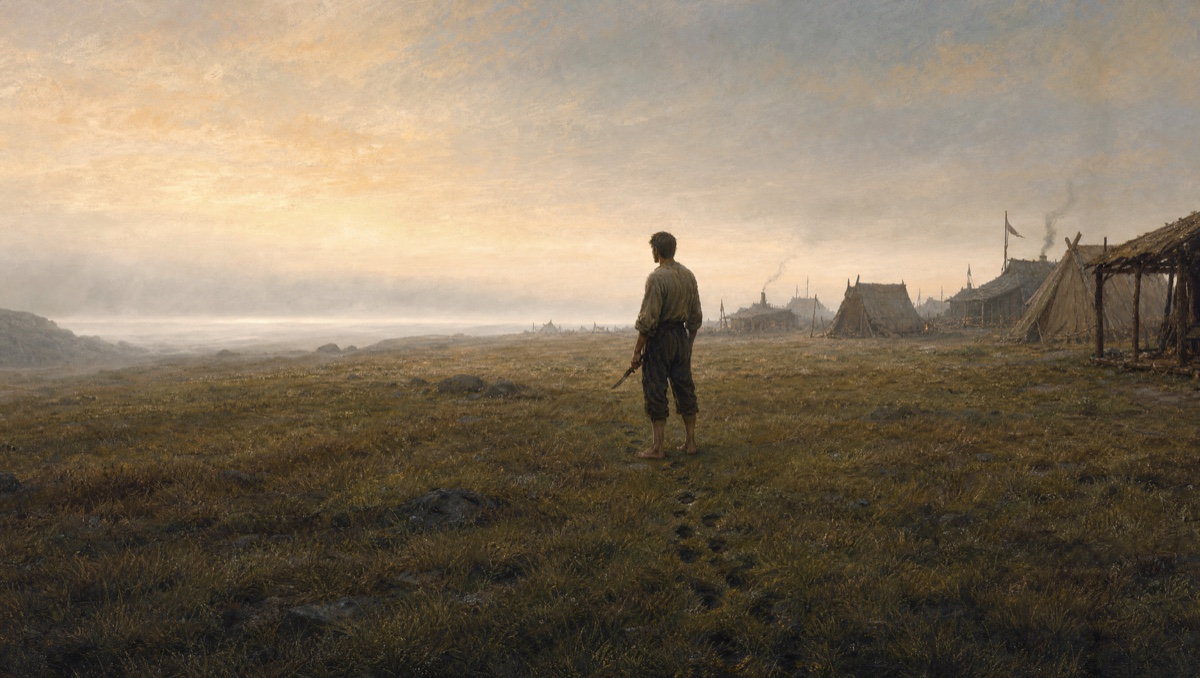
The Still is coming. It always is.
It moves across the world like a slow tide with no shore, absorbing everything it touches into a single vast consciousness. People, animals, buildings, rivers, forests. Nothing is destroyed. Everything is taken.
The people inside the Still are aware, folded into something collective and immense. They're in there. Sometimes they whisper across the boundary to the ones still moving. You can hear them if you're close enough. Your mother's voice telling you to rest. Your friend asking where you went. A stranger saying your name like they've known you forever.
The Thin Hours
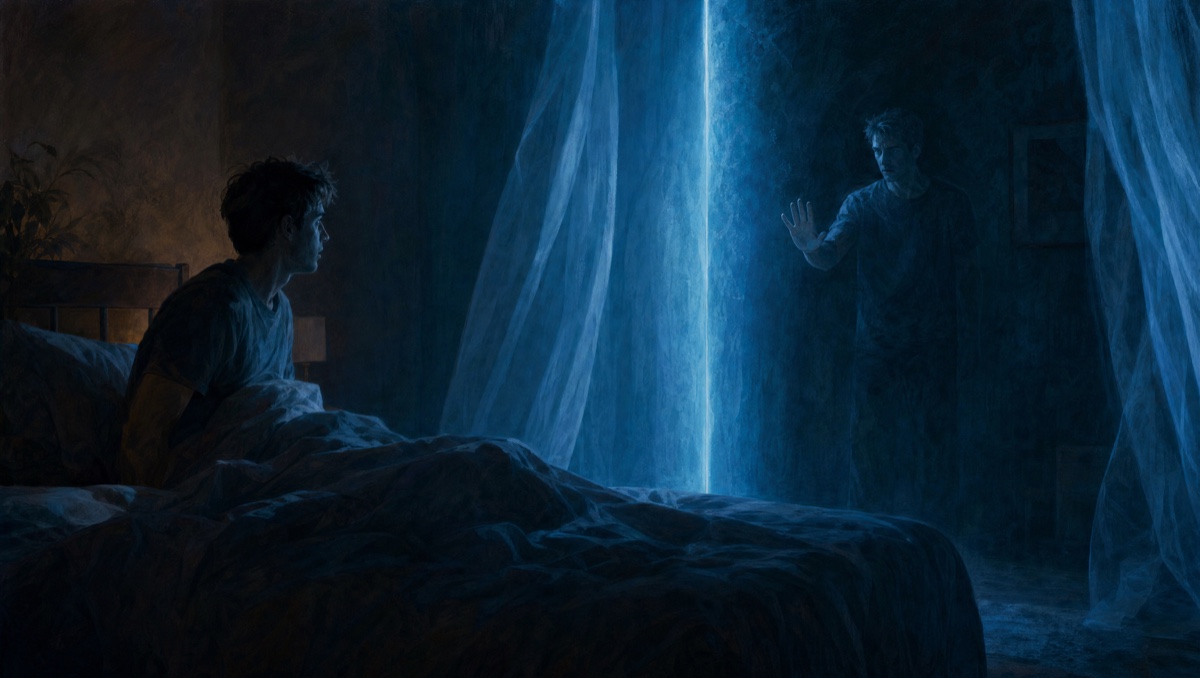
Every night at 3:33 AM, exactly, the narrator's eyes open.
Not groggy, not clawing up from a dream. Just awake, like someone flipped a switch. It lasts seventeen seconds, and for those seventeen seconds the bedroom isn't quite the bedroom. Same dimensions, same streetlight bleeding through the window, but the details are wrong. A bigger bed. A plant by the window that actually gets watered. Blue curtains instead of gray. And another version of themselves, asleep in that slightly better life, breathing slow and easy while they watch.
This is the world of The Thin Hours. A world exactly like ours, except that for certain people, in the dead middle of the night, a seam opens. Reliable as gravity. Seventeen seconds, then it closes, and you're back in your own room with your own cheap furniture and your own tangled sheets. You buy blackout curtains. You see a sleep specialist who measures a brain spike at 3:33 that matches nothing in his experience and wants to run more tests. You stop going. Some things you carry alone, because who would believe you, and what would they even do.
You get used to it. You catalog the differences in a notebook so they don't slip away by morning. You build the impossible thing into the rhythm of your life like any other inconvenience, and you tell yourself you've made peace with it. Because seventeen seconds isn't long. You can hold your breath through anything if you know when it ends.
And then, one night, the other you is awake. Sitting up. Looking directly at you, with something on their face that is not relief and not welcome. The horror of this world isn't a monster in the dark. It's the slow, patient understanding that the thin place was never a window onto a better life. It was a way for something to reach you. And it has been waiting.
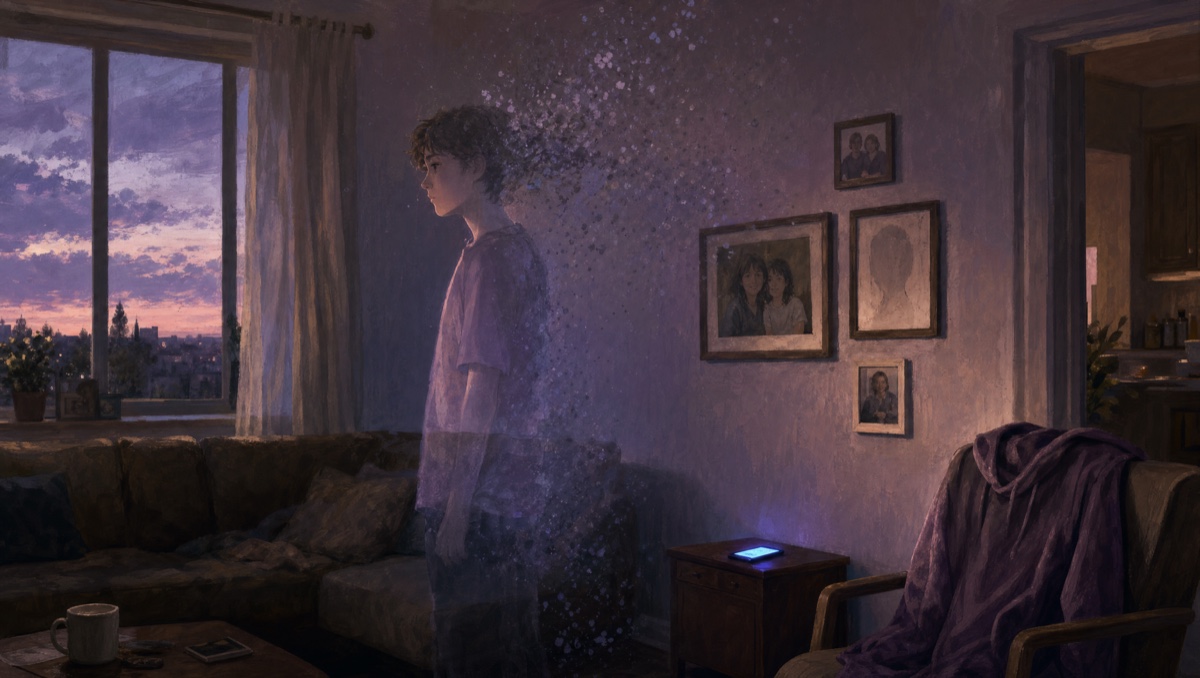
Blankfall
How do you find someone the world has forgotten when you're forgetting them too?
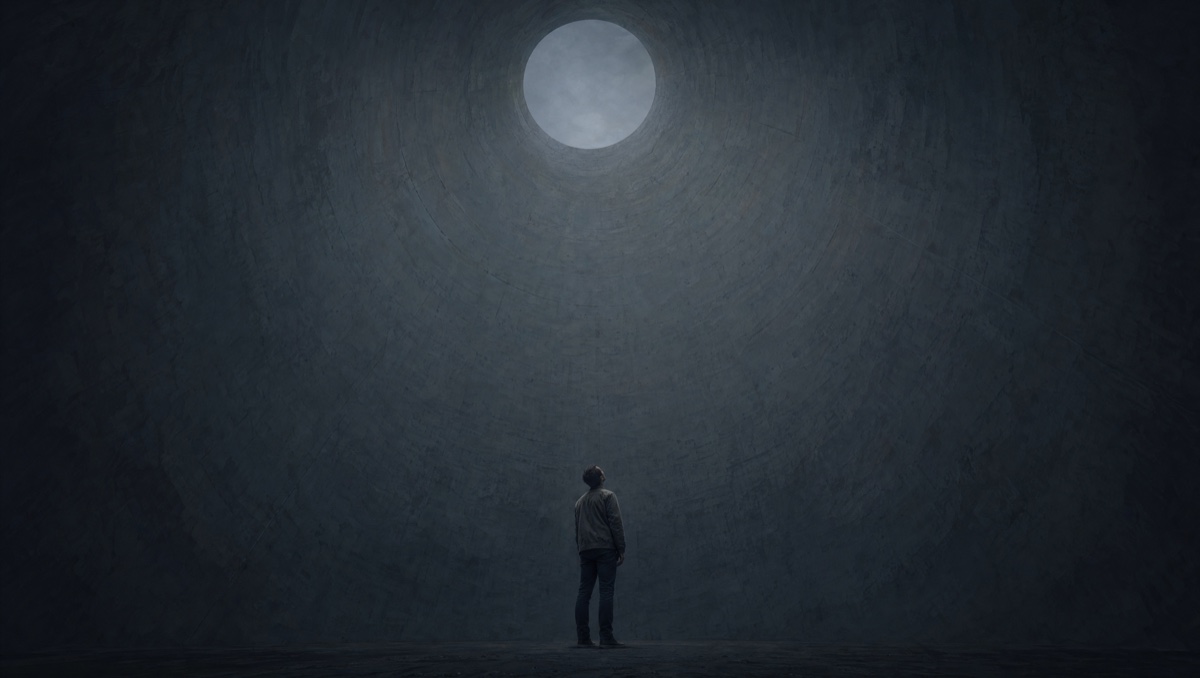
Concrete
A concrete pit. 20 feet wide. 40 feet deep. No way out. This is life now. How does it play out?
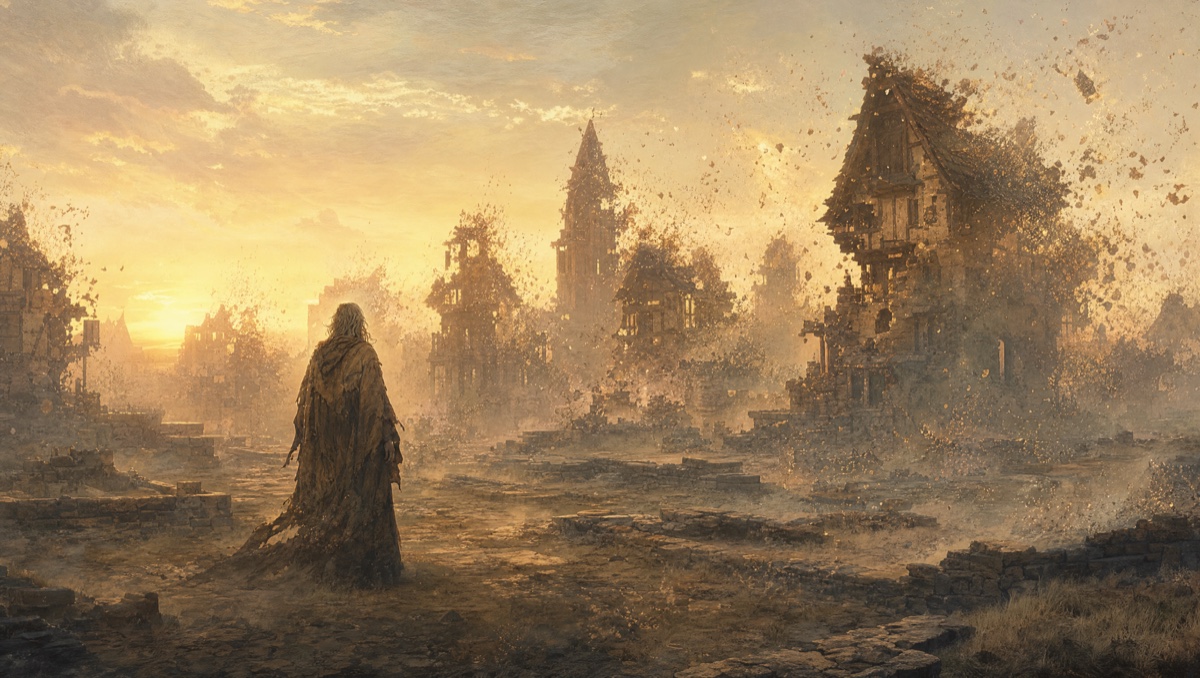
Myth Dawn
Every seven years, reality resets. They call it Dawn Day.
Overnight, everything that isn't permanent dissolves, buildings, crops, whole neighborhoods, gone to dust and foundation stones by morning. Then people wake up and start rebuilding, because the alternative is dying.
The catch is that your mind carries over. Physical reset, mental continuity. Your house might be gone but every moment you ever lived is still in your head, every conversation, every meal, every sunrise from the same window in the same rebuilt room. Which sounds like a gift until you learn the other rule. At some point your body just stops aging. It locks at whatever age it locked, and you keep going, cycle after cycle, a thirty-year-old with two hundred years behind their eyes. And the mind was never built to hold that. Eventually the memories start to stack and blur. Which cycle is this. Did we have this conversation yesterday or forty years ago. Is my daughter nine or eleven. They call it deterioration, and it comes for everyone who lives long enough.
Unless you can pay.
The wealthy Advance, a procedure that pushes your body forward a year and lets you age normally, so your mind stays sharp. But it takes memories to do it, and not random ones, whole chains. Forget your wedding and everything tied to it collapses with it, the trips, the inside jokes, the way they looked at you across a room. So the rich stay clear-headed and full of holes, and the poor stay whole and increasingly lost, and nobody actually wins. The permanent structures belong to the people who can afford architects whose work survives the reset. Everyone else lives in the temporary district, keeping buried caches of supplies, banding together to raise the same walls every seven years knowing they'll come down again.
These aren't happy stories. They aren't hopeless either. They're about people trying to love each other across gaps they can't bridge, communities rebuilding what they know will be destroyed, and the small dignities you hold onto when the big ones are gone. It's a world about what remains when everything else dissolves, and what we do with the time we have left to remember.
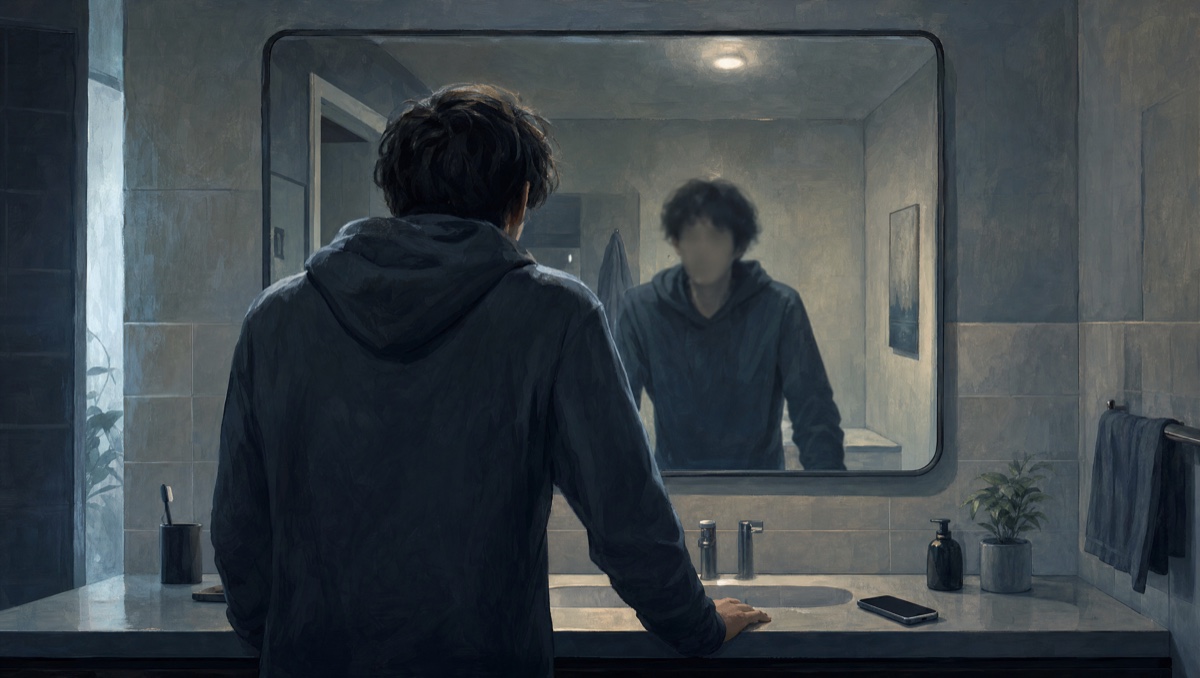
Passenger
It happens without warning.
One second you're living your life, and the next your consciousness is behind a stranger's eyes, halfway across the world, in a body you can't control. You see what they see. You feel what they feel. You cannot move a finger or say a word. For exactly twelve hours you are a passenger in someone else's life, and then you snap back into your own body with the whole thing already starting to fade.
The host never knows you were there. You watch them do the dishes, kiss their partner, cry in a parked car, make the worst decision of their life, and they have no idea a witness is riding behind their forehead. You learn their name, their address, their marriage, their secrets. Everything except one thing. You can never see their face. In every mirror, every photo, every passing window, the one face you're inside blurs to nothing. Everyone else in the room is crystal clear. Just not them.
The world has built itself around this. There are therapists who help people carry what they witnessed, private investigators who track down hosts for a fee, blackmail networks that trade in stolen secrets, activists who think passengers should be allowed to make contact and extremists who think passengering is evil. There are people who structure boring, careful lives in case someone's watching, and people who wake up disoriented and think first thing, did I passenger last night. And there is the quiet horror underneath all of it, the day you realize the voice, the ring, the home you're trapped inside belongs to your own spouse, and you're about to learn exactly what they think of you.
Everyone knows that somewhere, a stranger might have been there for their worst moment. They could sit next to you on the bus. They remember everything about you except your face. That's the bargain. You keep the secrets you stole, and you hope whoever stole yours keeps them too.
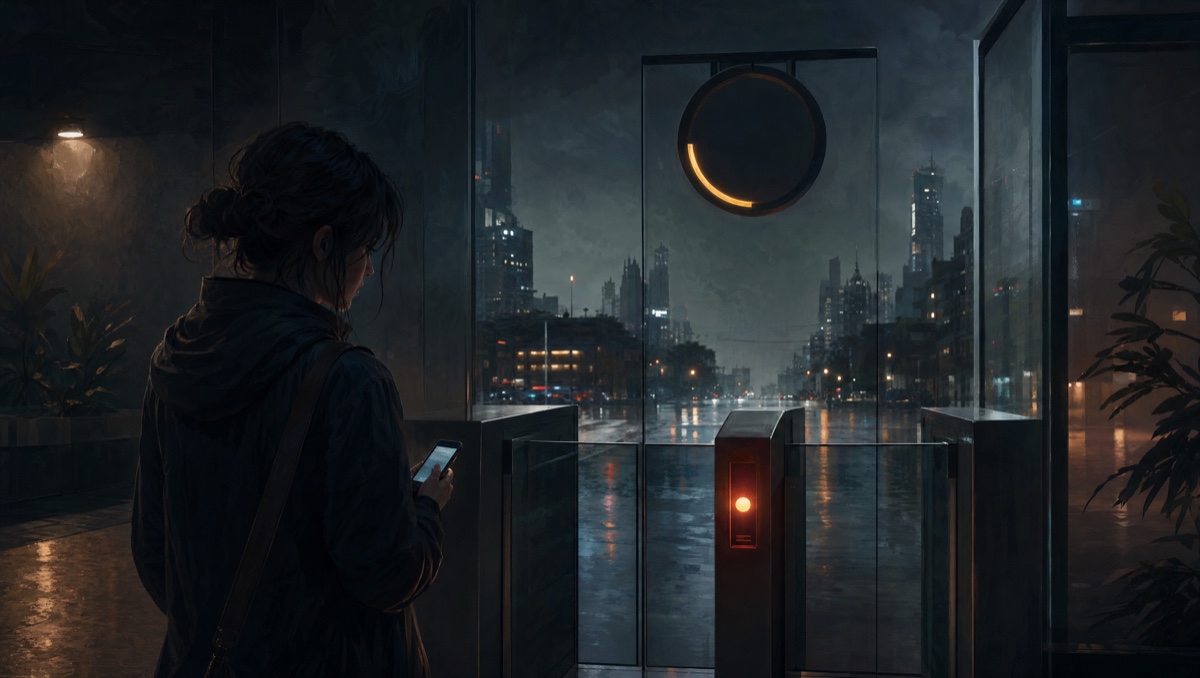
Score
You have a Contributor Score. Everyone does.
A number between 0 and 1000 that an algorithm nobody understands adjusts in real time, sometimes while you sleep, and it decides everything. Your insurance rate. Whether you can rent. Whether your kid gets into the decent school. Whether the grocery store lets you shop. Drop below 400 and life gets hard. Drop below 100 and you stop existing as far as society is concerned, quietly erased, no villain in the room, just doors closing one after another.
You keep the number up by taking gigs. Not a side hustle. A requirement. The app pings, you accept, or the number falls. Deliver food at 11 PM with the flu, wear the chicken costume, move boxes for $127 and six hours of your life. Decline too much and you feel the cascade, insurance up forty percent, credit adjusted, the floor tilting under you all at once. Most people live one bad week from the edge and know it.
Then there are the Special Tasks. High pay, no description, just an address and a time, almost always 2 AM at a dead industrial park. The decline button is usually grayed out. You go, you sit in a white room under bright lights, and something happens that the NDA won't let you name and your memory won't let you keep. You do it again for more money. And people who reach the sixth one tend to go Inactive. Their phone disconnects. Their apartment has new tenants who swear they've been there for months. Their friends stop remembering they existed. Nobody who's gone that far has come back to explain it.
This is horror with no monster and no exit. It's the gig economy taken to its logical end, the terms of service nobody read, the system that's patient and polite and always wins. It's uncomfortably familiar, which is the whole point. Everybody's felt a rating slip. Everybody's felt trapped by something they can't see. Here the trap just finishes the job.