Fennick woke up on the first morning after Dawn Day with a headache and a stranger’s life.
This was normal. Everyone woke up confused after the reset. The process took something from you, and you never knew what until you started finding the gaps.
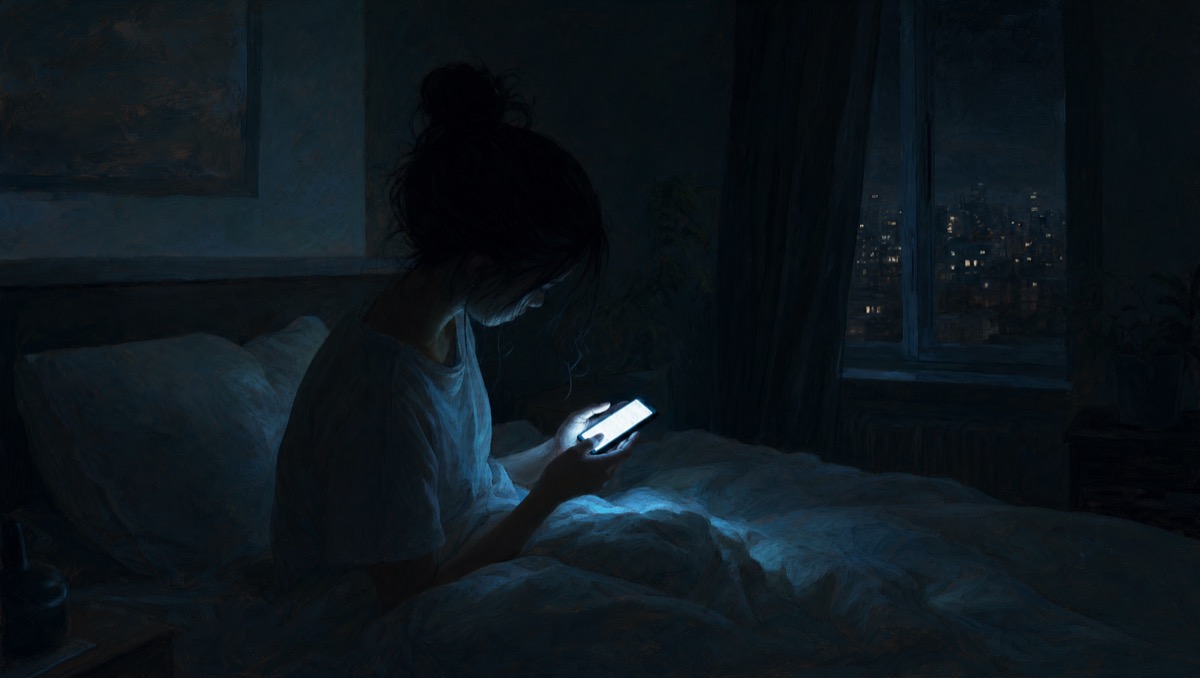
He sat up in bed. Looked around the room.
His room. He recognized it. Same apartment he’d had for… how long? He checked his orientation journal, the one they told you to keep for exactly this reason.
You are Fennick Ostara. You are 38 years old. You have advanced twice before. This is your third advancement. You live in Redstone District, third floor, apartment 7. You work as a clerk at the Memorial Archives.
Good. Basic facts intact. He kept reading.
You are not married. You have no children.
He felt a pang of something. Loss? Relief? Hard to tell. He kept reading.
Your mother lives in Eastmark. Visit her monthly. Your father died in Cycle 42.
Right. He remembered his mother. Round face, gray hair, made terrible soup but got offended if you didn’t finish it. He remembered his father’s funeral. Standing in the rain. Someone had given him an umbrella.
Wait.
He tried to picture the funeral more clearly. The casket. The gathering. His father’s face as they lowered him into the ground.
Nothing.
He remembered rain. He remembered an umbrella. He remembered the concept of grief, the weight of loss. But the actual scene was shapes without faces. Like he remembered that a funeral had happened more than the funeral itself.
He closed his eyes. Tried to picture his father at all. Any memory. Any moment.
Just shapes where a person should be. A voice without features attached. The knowledge that someone had existed without any actual memory of the someone themselves.
So that’s what he’d lost. His father. Not just a face. The whole chain. Every memory that connected to the man had collapsed, leaving only the echoes. Facts without feeling. Knowledge without experience.
It could have been worse. He’d heard stories of people who lost their childhoods entirely. Lost their spouses. Lost decades of their lives.
He’d lost his father. Sad, but manageable. The man was dead anyway. What did it matter if Fennick couldn’t picture him anymore? Couldn’t remember teaching him to fish, or arguments they’d had, or the sound of his laugh?
His journal would tell him those things had happened. That would have to be enough.
He got out of bed. Made breakfast. Checked the rest of his journal to make sure he hadn’t missed anything important.
Current project at Archives: Classification of Cycle 31-35 residential records. Supervisor: Archivist Kesswyn. Status: Ongoing.
He knew Archivist Kesswyn. Older woman, strict but fair, always smelled like peppermint. The project sounded familiar. He remembered the basic parameters, even if some specific details were fuzzy.
That was the thing about advancement. Skills stayed. Habits stayed. General knowledge stayed. It was the personal stuff that got hit. The emotional connections. The specific moments.
He got dressed, ate breakfast, headed to work. Normal morning. Normal day.
Except.
—-
Three weeks later, Fennick found the box.
He was cleaning out his closet, looking for winter clothes as the season changed. Behind a stack of old blankets, wedged into the back corner like someone had hidden it there on purpose.
A wooden box. Small. Locked.
He didn’t recognize it.
He checked his journal. Nothing about a box. Nothing about what might be inside.
The lock was simple. He picked it with a bent hairpin, a skill he definitely didn’t remember learning but apparently still had.
Inside: Letters. Dozens of them. All addressed to him. All in handwriting he didn’t recognize.
My dearest Fennick…
He read the first one. Then the second. Then sat down on his closet floor and read all of them.
They were love letters. Passionate, intimate, detailed. From someone named Suvana. Someone who apparently loved him desperately. Someone he’d been involved with for years.
He had no memory of her at all.
—-
The letters told a story.
They’d met at the Archives. She worked in the preservation department, handling damaged documents. He’d brought her a water-stained census record from Cycle 29. She’d made a joke about how the original scribes must have been drunk.
He’d laughed. Asked her to lunch.
They’d been together for three cycles. Secret, apparently. The letters referenced needing to hide, being careful, meeting in places where no one would see them.
Why secret?
The answer came in the later letters.
The Archives has those ridiculous fraternization rules. Different departments aren’t supposed to mix. Something about “maintaining professional boundaries” and “preventing favoritism in record verification.” As if loving you would make me falsify a census document.
But Kesswyn watches everything. And your supervisor is worse. So we meet at the café three blocks over. We take different routes home. We pretend we barely know each other in the hallways.
It’s exhausting. But it’s worth it. You’re worth it.
She’d been planning to advance. Before him. And she was worried about losing memories of their relationship.
I know you worry about what happens when I advance. I know you think I’ll forget you. But some things are stronger than memory, Fennick. Some connections survive even when the mind can’t hold them.
The last letter in the stack was different. Shorter. More desperate.
I went through with it. The advancement. And you were right. You were right and I’m so sorry.
I don’t remember you. I read my own journal and I see your name and I know we were together but I can’t feel it. I look at your face and I see a stranger.
Please don’t try to find me. Please don’t try to make me remember. It hurts too much to see you and feel nothing.
I’m sorry. I’m sorry. I’m sorry.
Goodbye, Fennick. I hope you find someone who doesn’t lose you.
No signature. No date. Just the words, in handwriting that shook.
Fennick sat in his closet, holding the letter, trying to feel something.
He couldn’t.
Because he’d lost her too. Whatever chain of memories connected him to this woman named Suvana, whatever seed memory anchored their relationship in his mind, his own advancement had erased it.
She’d lost him. Then he’d lost her.
They’d both forgotten each other.
—-
He spent the next week looking through Archives records.
Suvana Threll. Age 41. Preservation specialist. Advanced three times. Currently assigned to the Historical Documents division, fourth floor.
He worked on the third floor.
They might pass each other in the hallways. Might have already. Two strangers who used to be in love, walking past each other without a flicker of recognition.
He could go find her. Could show her the letters. Could try to rebuild something from the ruins.
But her letter had asked him not to.
Please don’t try to find me. Please don’t try to make me remember.
She didn’t want to be found. Didn’t want to face a man who knew her better than she knew herself.
He understood. He felt the same way about the letters. Each one described moments he should remember. Feelings he should feel. A version of himself who had been passionately, desperately in love.
That version was gone.
He was just the shell that remained.
—-
Except.
He kept finding things.
A sketch tucked into one of his reference books. A woman’s face. Pretty. Dark hair. Eyes that seemed sad even in the drawing.
He must have drawn it. The paper was old, the lines faded. But he couldn’t remember when. Couldn’t remember why.
It must be her. Suvana.
He compared the sketch to the Archives employee records. Found her portrait. Same face. Same eyes.
He had been enough in love to draw her. To keep the drawing hidden in a book for years.
And now he felt nothing looking at it.
—-
He started keeping better journals.
Not just the basic orientation stuff. Real journals. Every day. Every conversation. Every feeling.
He wrote about finding the letters. About the sketch. About the strange hollow feeling of knowing he’d loved someone without being able to feel that love.
If I advance again, I want future-me to know what happened. I want them to understand why these letters exist. Why this sketch is in this book. Why there might be a woman on the fourth floor who looks at me and sees a stranger.
He wrote about his mother’s soup. About his coworker’s terrible jokes. About the way winter light came through the Archive windows in the morning.
He wrote everything down.
Because someday he might advance again. Might lose more. Might wake up and find this journal the way he’d found the letters, full of someone else’s life.
At least that future version would have context.
—-
Two months after finding the box, he saw her.
Fourth floor. Historical Documents. He’d been sent up to retrieve a misfiled census page.
She was at a preservation table, carefully separating water-damaged pages. Focused. Professional. Dark hair pulled back.
The same face from the sketch.
She looked up when he approached. Smiled the automatic smile of a coworker she didn’t recognize.
“Can I help you?”
“Looking for a Cycle 29 census page. Residential district forty-seven. Got misfiled.”
“Ah.” She checked a stack of documents. “Yes, I have it here. We’re waiting for the binding adhesive to dry before we return it.”
“No rush.”
He should leave. He knew he should leave. Her letter had asked him not to seek her out.
But he couldn’t move.
“Is everything all right?” She was looking at him strangely. “You seem…”
“Sorry.” He shook his head. “You just reminded me of someone.”
“Oh?” Polite curiosity. Nothing more. “Who?”
He almost told her. Almost said, You. You reminded me of you. We used to love each other. You sent me letters. Dozens of them. And now we’re strangers.
But what would be the point?
“No one,” he said. “Just a face from another cycle. Memory playing tricks.”
She nodded sympathetically. “That happens. Especially after advancement. I spent two weeks after my last one thinking my neighbor was someone I went to school with. Turns out they just had similar noses.”
She laughed.
He tried to laugh too.
“I’m Fennick,” he said. “Third floor. Classification.”
She tilted her head slightly. Like she was trying to remember something.
“Suvana Threll,” she said finally. “Preservation.”
“Nice to meet you, Suvana.”
“Nice to meet you too.”
He left. Walked back to the stairs. Didn’t look back.
Behind him, he heard her return to her work. Heard the soft sounds of paper being carefully handled. The normal rhythms of a normal day.
She didn’t remember him.
He didn’t remember her.
They’d both lost each other.
And now they were just two strangers who worked in the same building.
—-
That night, he added to his journal:
I met her today. Suvana. We introduced ourselves like it was the first time. Maybe for her it was. The letters say we knew each other for three cycles, but she looked at me like she’d never seen me before.
I don’t know how to feel about it. The letters say I loved her. The sketch says I loved her. But I look at her and I just see… a woman. A stranger. Pretty. Seems nice. Nothing more.
Is that worse than what she went through? She lost me first. She wrote that letter about watching me become a stranger. At least I don’t have to feel that pain. I just have this… emptiness.
Maybe emptiness is better than pain.
Maybe not.
Either way, I’ve lost something I can never get back. We both have. And the worst part is neither of us can feel the loss. We’re just two people with gaps where something important used to be.
Tomorrow I’ll go back for the census page. I’ll probably see her again. We’ll be polite. Professional. Two coworkers who happen to work on different floors.
And neither of us will ever know what we lost.
—-
He did see her again.
And again.
And again.
Work kept bringing them together. Documents that needed classification. Files that needed preservation. The ordinary business of the Archives.
Each time, they were friendly. Professional. Nothing more.
Except.
Sometimes he caught her looking at him strangely. Like she was trying to remember something that kept slipping away.
Sometimes she’d pause mid-sentence, like she was about to say something, then shake her head and continue with work-related matters.
Once, she’d called him by his full name in a particular way. Fennick Ostara. Said it almost tenderly, like it meant something.
Then looked confused about why she’d said it that way.
He didn’t ask. She didn’t explain.
But something was there. Something beneath the surface. Some connection that neither of them could consciously remember but that still existed in the patterns of their behavior, the rhythms of their interactions.
The letters had said: Some connections survive even when the mind can’t hold them.
Maybe she’d been right.
—-
Six months after finding the box, he asked her to lunch.
“Just lunch,” he said quickly, when he saw her hesitation. “Coworkers. The café across the street has good soup.”
She considered him for a long moment.
“Why?” she asked finally.
“Why lunch?”
“Why me?” She set down the document she’d been examining. “We work in the same building. We’re not on the same team. We barely talk except when work requires it. So why are you asking me specifically?”
He could lie. Could make up something about wanting to build cross-departmental relationships. Something professional and safe.
But he was tired of being safe.
“I found some letters,” he said. “In my apartment. After my last advancement.”
Her face went still.
“Letters?”
“From someone named Suvana. Someone I apparently loved very much.” He met her eyes. “Someone I don’t remember at all.”
The silence stretched.
“Did you…” She stopped. Started again. “Did you read them?”
“All of them.”
“Even the last one?”
“Especially the last one.”
She closed her eyes. When she opened them, they were wet.
“I asked you not to find me.”
“I know.”
“I asked you to let me go.”
“I know.” He took a breath. “But I can’t. Not because I remember loving you. I don’t. Not because I feel what those letters describe. I can’t. But because…”
He stopped. Tried to find the words.
“Because when I look at you, something in me recognizes you. Not my mind. Not my memory. Something deeper. Some part of me that knows we were important to each other even though I can’t remember why.”
She was crying now. Silently. The tears running down her face while she stood perfectly still.
“I feel the same thing,” she whispered. “Every time I see you. Like I’m forgetting something important. Like there’s a word on the tip of my tongue that I can never quite say.”
“Then come to lunch.” He held out his hand. “Not to try to recreate what we had. Not to pretend we can get it back. Just… lunch. Two people who might have known each other once. Trying to figure out what that means.”
She looked at his hand.
“What if we can’t figure it out?”
“Then at least we’ll have tried.” He kept his hand extended. “And at least we won’t be wondering anymore.”
Long pause.
Then she took his hand.
—-
They went to lunch.
It was awkward. Stilted. Two strangers trying to have a conversation while simultaneously aware that they should know each other better than they did.
But somewhere in the middle, she laughed at a joke he made. A real laugh. And he felt something flutter in his chest.
Not memory. Not the passionate love described in the letters.
Something new.
Something beginning.
Some connections survive even when the mind can’t hold them.
He didn’t know if that was true.
But sitting across from her in the café, watching her smile at him over soup, he thought maybe it didn’t matter.
Maybe they couldn’t get back what they’d lost.
Maybe they could build something new instead.
—-
That night, he added to his journal:
We went to lunch. Suvana and me. It was strange. We talked about our work. Our families. The weather. Small things. Safe things.
But also: she laughed at my joke about the census filing system. The same joke I apparently told her three cycles ago, according to one of the letters. She didn’t remember the original joke. But she still found it funny.
I don’t know what that means.
Maybe nothing.
Maybe everything.
I’m going to ask her to lunch again next week. And the week after that. And every week until one of us advances again.
Not because I think we can rebuild what we had.
Because I think we might be able to build something different.
Something that belongs to who we are now.
Not the ghosts of who we were.
—-
Two cycles later, they got married.
It wasn’t the same marriage the letters had described. Different circumstances. Different people.
But real.
And documented extensively, in journals that future versions of themselves would be able to read and understand.
So that even if they advanced again. Even if they lost each other again.
Some part of the story would survive.