The first memory that wasn’t hers came on a Thursday.
Lila Fremont was in the practice room behind Lin Hall, working on her drawing technique the way Professor Cavanaugh had shown them. Slow and steady. Find the layer you want, reach for it, pull just enough to feel it without taking it into yourself.
She was drawing from a reading desk. Old wood, decades of students leaning their elbows into it while they studied. The saturation was mild and academic, the safe kind, exactly the sort of thing a second-year Ashreader was supposed to practice on.
She pulled. Felt the familiar tug of accumulated focus flowing into her. Used it to sharpen her own concentration the way she’d been taught.
And then she was someone else.
Not completely. Not like possession or some dramatic takeover. More like a double exposure.
She was still Lila, still sitting in the practice room, still aware of the desk under her hands. But layered on top of that, so vivid it made her gasp, was the experience of a woman she’d never met. Sitting at this same desk. Reading something in Latin. The particular satisfaction of a difficult passage finally making sense, the way a locked door feels when the key turns.
The woman’s name was something starting with E. Lila could almost hear it, like a word caught between radio stations. The woman wore glasses with thin gold frames and had ink stains on her right hand and she was so deeply absorbed in her reading that the building could have caught fire and she wouldn’t have noticed.
Lila yanked her hands off the desk and the memory shattered.
She sat there breathing hard, her own hands in her lap, her own ink-free fingers curling into fists. The practice room was quiet. Nobody else had noticed. Two other students were working on their own exercises at the far end of the room, bent over their tasks.
That was bleed-through. She knew the word. Cavanaugh had covered it in class, the way you’d cover a safety warning before letting students use power tools. Draw too much from a place and you start taking on its experiences as your own. The standard caution. The thing that happened to careless students who went too deep too fast.
Except Lila hadn’t gone deep. She’d been doing exactly what she was supposed to do. Mild saturation. Controlled pull. Textbook technique.
She went back to her room and told herself it was a fluke.
The second memory came three days later. She was walking through the main corridor, not drawing from anything, just moving through the building the way she did a dozen times a day. The hallway was saturated with a century of student traffic, but she’d been walking through it for over a year without incident. Background noise. You learned to tune it out.
A boy ran past her. Late to class, probably. His shoulder brushed hers and in that quarter of a second Lila was running too, but not in this hallway and not in this year.
The building looked almost the same but the light fixtures were older and the paint was a different shade of green, and she was late for something important and her heart was hammering with a fear that tasted like 1987.
The boy was gone. The memory faded. Lila stood in the hallway with her hand on the wall, waiting for her pulse to slow down.
That one was harder to dismiss. She hadn’t been drawing. She’d barely been touched.
And the memory had been specific in a way that felt less like bleed-through and more like a channel changing. One moment she was herself, the next she was someone else, and the switch happened without her consent or participation.
She went to the library and researched bleed-through for three hours. The texts described it as a consequence of overuse. Drawing too frequently, building up a tolerance, pulling older experiences that were harder to let go of.
None of that described what was happening to her. She wasn’t overusing anything. The memories were coming to her, rising up through the building’s layers and finding her like water finding a crack.
She didn’t tell anyone. That was the first mistake.
She didn’t tell anyone because the memories, as alarming as they were, also felt incredible. The woman with the Latin text had experienced a moment of pure intellectual joy that Lila had never felt on her own. The running boy’s fear had been electric, alive.
Lila’s own life was not sharp and present. Lila’s own life was careful and measured and controlled. Good grades. Clean room. Polite to adults. Don’t make waves. She’d carried that programming into Mudwick and it had earned her decent marks and a reputation as reliable and boring.
The borrowed memories were not boring. They were vivid and raw and full of feelings that Lila had spent seventeen years learning not to have.
So she let them come.
She started sitting at that desk on purpose. Not drawing, just sitting. Letting the layers of accumulated experience rise up through the wood and into her hands.
The woman with the glasses came back, and this time Lila let the memory play longer. Felt the woman’s frustration with a passage that refused to yield. Felt her elation when it finally did. Felt, underneath both of those things, a loneliness so familiar it made Lila’s eyes sting.
The woman had been alone in the way that smart people are sometimes alone. Surrounded by knowledge, starved for connection.
She’d given her best hours to study and her leftover hours to people, and the imbalance had hollowed out something in her social life that no amount of intellectual achievement could fill.
Lila recognized that loneliness because she lived in it.
Other memories found her. Walking across campus became a gauntlet of involuntary experience.
A bench that held an old argument. A doorway where someone had stood working up courage to knock, then turned away. The dining hall floor, which held so many layers that Lila had to walk through it with her jaw clenched.
She started to lose track of which feelings were hers.
That was the part the textbooks warned about, and it arrived so gradually that she almost missed the transition.
A Sunday morning in March, lying in bed, reliving an emotional conflict between two strangers who’d argued on a bench outside Thornwell sometime in the early 2000s. She could feel both sides of it. The hot righteous certainty of one and the cold hurt withdrawal of the other. The feelings were as real and immediate as if they’d happened to her that morning.
She tried to summon a feeling of her own. Something purely Lila.
Her mother’s voice on the phone. Her roommate’s laugh. The taste of the terrible coffee she drank every morning because the ritual of it made her feel normal.
The feelings came, but they were thin. Watercolors next to the oil paintings of borrowed experience. Her own memories felt pale and quiet compared to the vivid emotional life she’d been absorbing from the building around her.
That scared her. Finally, genuinely scared her.
She went to the campus clinic on a Tuesday.
The practitioner on duty was a calm woman named Dr. Asante who listened without interrupting while Lila described the memories, the involuntary absorption, the creeping sense that her own emotional life was being crowded out by other people’s experiences.
Dr. Asante asked questions. When did it start. How often. How vivid. Whether Lila had been practicing non-standard techniques or visiting restricted areas.
No to everything. Lila had done everything by the book. That was the whole point of Lila.
“What you’re describing sounds like hyperpermeability,” Dr. Asante said. “Your boundaries are thinning. The barrier between your own experience and the saturation around you is becoming porous.”
“Why?”
“Could be developmental. Your abilities may be changing. Could be environmental. Some practitioners adapt to high-saturation spaces by building stronger walls. Others become more open.”
“How do I close it?”
“Dampening exercises. Grounding practices. Learning to rebuild the barrier consciously.”
“And if those don’t work?”
Dr. Asante’s face did something careful. “Let’s start with what’s likely to work before we worry about alternatives.”
The dampening exercises helped. A little.
Lila practiced them obsessively, sitting in her room with her hands flat on her own desk and visualizing a wall between herself and everything outside her skin. Brick by brick. Build the wall. Trust it to hold.
It held during the day, mostly. She could walk the corridors without catching stray memories. The borrowed experiences retreated to the edges of her awareness, present but muffled, the way traffic sounds through a closed window.
At night, the wall crumbled.
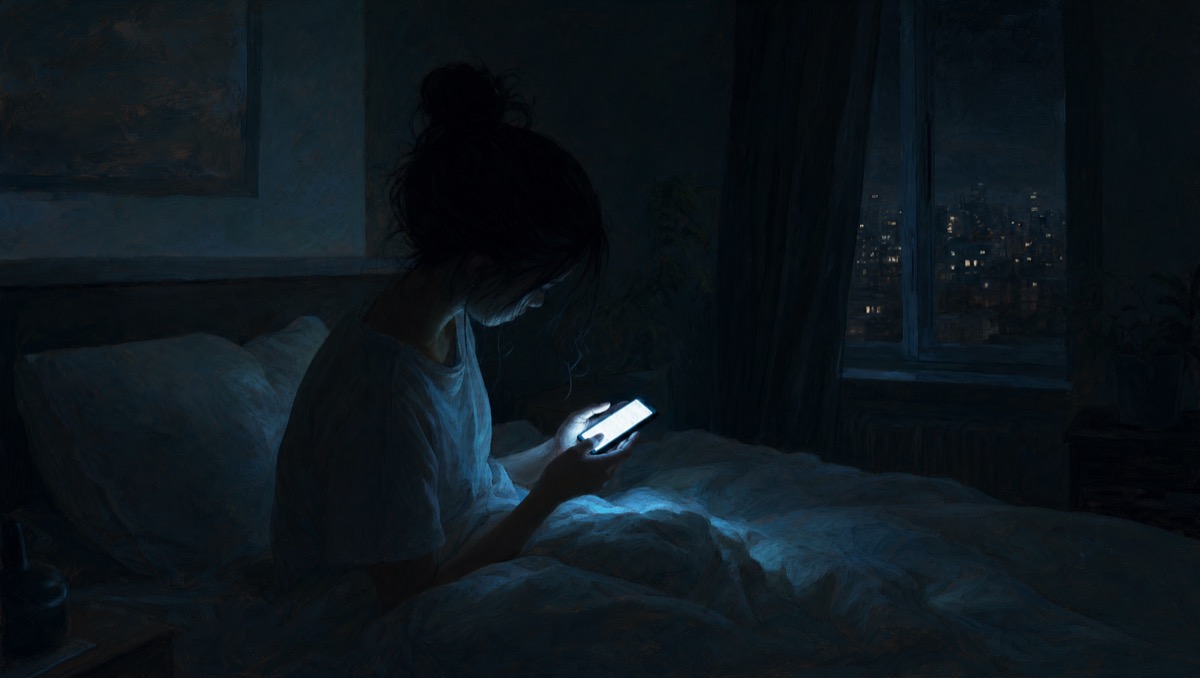
Lying in bed with her defenses lowered by exhaustion, the building’s memories seeped in through every surface.
The walls of her room turned out to be saturated with the accumulated anxieties of decades of students who’d lain awake in this same bed worrying about the same kinds of things. Exams. Friendships. Whether they belonged here. Whether anyone would notice if they disappeared.
Lila lay in their anxiety and felt it merge with her own until she couldn’t tell where the building ended and she began.
She told her roommate finally. A girl named Paloma who was quiet and steady and didn’t startle easily. Lila described the memories, the thinning boundaries, the nightly dissolution of self.
Paloma listened. When Lila finished, Paloma got up, walked to her side of the room, and came back with a small clay pot that held a single sprig of something green and hardy.
“My abuela sent this from Albuquerque,” she said. “Rosemary. It’s been growing on her windowsill for eleven years. She said it holds her kitchen.”
“I don’t understand.”
“Put your hands on it.”
Lila touched the pot.
Through the clay, through the soil, through the roots and stems of an eleven-year-old rosemary plant, she felt a kitchen in New Mexico. Warm tile. The smell of chiles roasting. Hands kneading dough. A woman singing something in Spanish while the afternoon light came through a window and made the whole room gold.
It was someone else’s memory. But it didn’t invade. It didn’t crowd. It sat there in the clay like a candle in a dark room, giving off warmth without consuming anything.
“Feel the difference?” Paloma asked.
Lila did. The building’s memories pushed. They surged and seeped and forced their way in through any gap in her defenses. The rosemary offered. It held its warmth and let Lila come to it, and the exchange was gentle, reciprocal, nothing like the overwhelming flood she’d been drowning in.
“You’ve been absorbing from a building that has a hundred years of everyone’s anxiety baked into its walls,” Paloma said. “That’s not the same as connecting with a place that was loved.
“You don’t have to avoid the building. You just need something to anchor to. Something that holds your experience, so when the building tries to fill you up, you’ve got something real to come back to.”
It was so simple that Lila wanted to cry. Not a wall. Not a dampening exercise. Just something of her own to hold onto when the world got too loud.
She kept the rosemary on her nightstand. Touched it before she slept. Let the New Mexico kitchen be the last thing she felt each night, warm and offered, a borrowed experience that she chose instead of one that chose her.
It wasn’t a cure. She still felt the building’s memories pressing against her awareness. But the rosemary gave her a reference point. A way to check whether the feeling she was having belonged to her or to a stranger from 1987 or to a lonely scholar from a century ago.
Her own feelings were still quiet compared to the borrowed ones. But they were hers, and that mattered more than she’d realized.
Seventeen years old and learning the difference between absorbing the world and actually living in it. Turns out those aren’t the same thing. Turns out one of them can eat the other alive if you’re not paying attention.
Lila paid attention now. That would have to be enough.