The bar was dying and everybody knew it.
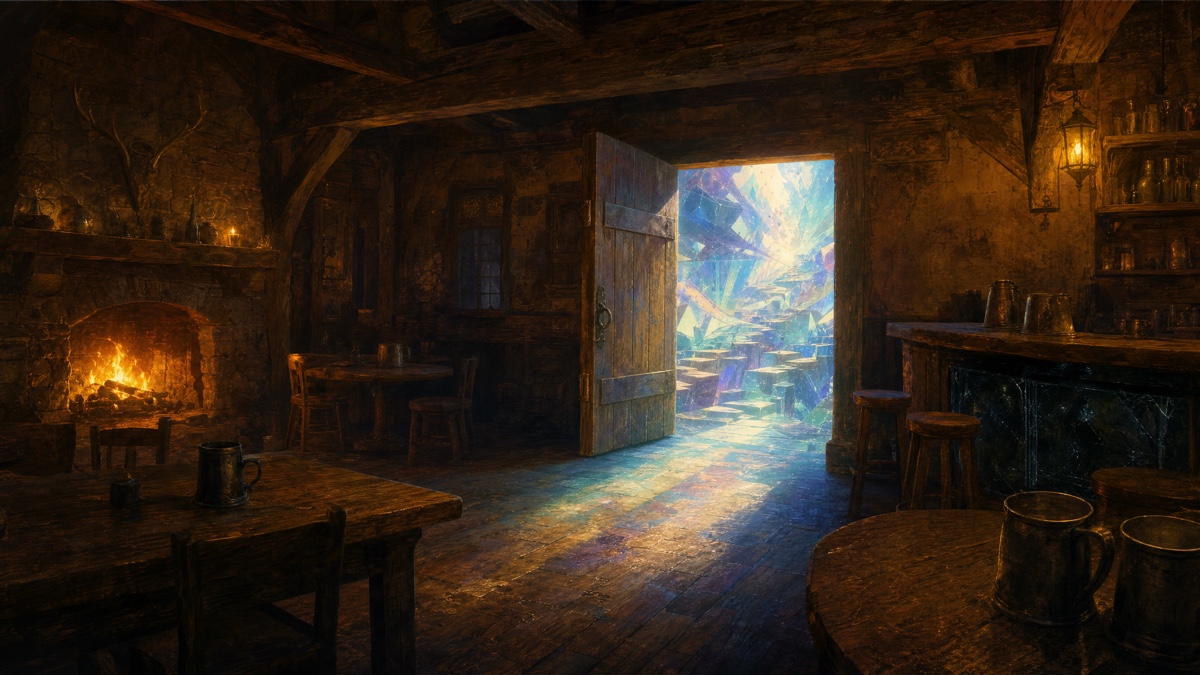
Louie’s had been on Beale Street since 1947. My grandfather opened it with money he’d saved from three years of playing every juke joint between Memphis and New Orleans. He called it a “listening room,” which was his way of saying he cared more about the music than the money.
The music had been good for seventy years. The money had been bad for most of them.
I’d inherited the place when my father passed in 2015. Kept it going for three years on stubbornness and cheap beer, but the writing was on the wall. The developers had already bought every building on the block. They were just waiting for me to give up so they could tear down Louie’s and put up another tourist trap.
The last night was supposed to be sad. That’s how these stories go. The old place closes, everyone cries, someone writes a think piece about the death of authentic culture.
Instead, it was the best night I’ve ever had.
—-
The saturation in Louie’s was something else.
Seventy years of musicians playing their hearts out. Seventy years of crowds feeling something lift off their shoulders when the right song hit at the right moment. Every note that had ever been played in that room had left something behind, layered so thick you could almost hear it between sets.
My grandfather had been a practitioner. Not trained, not formal, but he understood what he was doing. He’d built Louie’s on a spot that was already saturated with music, then spent fifty years adding to it deliberately. Contributing his joy every time he picked up his trumpet. Anchoring the feeling of Friday nights and Saturday crowds into the walls themselves.
When I took over, I didn’t have his talent. Couldn’t play an instrument to save my life. But I could feel what he’d left. Could lean on it when the crowds were thin and the bills were thick.
Some nights I’d come in alone, after closing, and just sit in the saturation. Let seventy years of good music wash through me.
That’s how I got the idea for the last night.
I put out the word three weeks before closing.
Anyone who’d ever played at Louie’s was welcome to come back. One last set. No cover charge. Just music, all night, until the sun came up and the bulldozers started their engines.
I figured maybe a dozen people would show up. Old-timers who remembered my grandfather. A few of my regulars.
By eight o’clock, there was a line around the block.
They came from everywhere.
Musicians who’d played Louie’s in the seventies, back when the blues still meant something to white record executives. Singers who’d gotten their start on our tiny stage and gone on to fill arenas. Horn players and guitarists and a woman who’d been playing the same piano we kept in the corner since before I was born.
And practitioners. More practitioners than I’d ever seen in one place.
I didn’t know most of them had the gift. But that night, feeling the saturation swell with every new arrival, I understood. My grandfather hadn’t just built a listening room. He’d built a beacon. A place where people who felt things deeply could come and feel them together.
They’d been coming to Louie’s for decades. They just hadn’t told each other.
—-
The music started at nine.
Old Earl Johnson, who’d played with my grandfather back in the day, took the stage first. He was eighty-seven and his fingers weren’t what they used to be. But when he started playing, something happened.
The room helped him.
Seventy years of accumulated music rose up through the floor and wrapped around his hands. The notes he couldn’t quite reach on his own came anyway, pulled from the walls and the stage and the memory of every perfect performance that had happened in this room.
Earl played like he was forty again. Played like the blues themselves had decided to give him one more good night.
When he finished, the crowd didn’t just applaud. They roared.
—-
It went on for hours.
Every musician who took that stage got the same gift. The saturation buoyed them up, filled in the gaps, reminded their hands and voices what they used to be capable of. A woman sang songs her grandmother had written. A kid barely twenty played like he’d been doing it for fifty years.
And with every set, the crowd contributed back.
Not deliberately, for most of them. But the practitioners knew what they were doing. They were feeding joy into the walls, piling it on top of everything my grandfather had built, making sure the last night of Louie’s would be remembered.
By midnight, the saturation was so thick you could almost see it. A shimmer in the air. A warmth that had nothing to do with body heat.
By two in the morning, people were crying without knowing why.
By four, the sun starting to pink up over the city, everyone was holding hands and singing together. Not performing. Just singing. The kind of collective voice that happens when strangers decide, just for a moment, to stop being strangers.
—-
I played the last set myself.
This was ridiculous. I couldn’t play. Had never been able to. My grandfather tried to teach me when I was young and gave up in frustration when it became clear I had no talent.
But I walked up to that stage at five in the morning and picked up his trumpet, the one he’d played at the opening in 1947, and I put it to my lips.
Seventy years of music played for me.
I didn’t make the notes. The room did. My grandfather did, from somewhere inside the walls, guiding my hands the way he’d tried to guide them when I was a kid. I was just the vessel, the excuse, the last person to stand on that stage and let Louie’s sing through them.
It was three minutes of the most beautiful music I’ll ever be part of.
When I finished, nobody clapped. The silence was better. The kind of silence that says more than noise ever could.
—-
The bulldozers came at seven.
We stood outside and watched them take the first swing. The wall crumbled, and I felt a piece of my heart go with it.
But here’s the thing. The saturation didn’t die.
When that wall came down, seventy years of accumulated music scattered into the air, into the crowd and the buildings nearby and the street below and the sky above.
Every practitioner who’d been there that night carried a piece of Louie’s home with them. The joy my grandfather had built was distributed now, spread across the country, planted in a hundred different places that would never forget where it came from.
The building was gone by noon.
But the music went everywhere.
—-
I got a letter last week. From a woman in Portland who’d played at Louie’s once, twenty years ago. She’d been at the last night. Felt what happened.
She’d opened a listening room of her own. Called it Louie’s Too. Said she’d been contributing my grandfather’s joy into the walls from the first day, mixing it with her own, starting something new that remembered something old.
There are four more Louie’s now. Denver, Seattle, Austin, Atlanta. Practitioners who’d been there that last night, doing what my grandfather did, building beacons in new places.
The developers got their tourist trap. It’s a cocktail bar with Edison bulbs and exposed brick. Absolutely soulless.
But down the street, around the corner, in cities across the country, the music keeps playing.
My grandfather would have loved that.
Hell, I love that.
I don’t own a bar anymore.
But I’ve got a token. A brick from Louie’s, saturated with everything that last night held. When I’m feeling low, I hold it and remember what it felt like to play music I couldn’t play.
What it felt like to watch seventy years of joy scatter into the wind and land somewhere new.
What it felt like to lose something and have it turn into something more.
That’s the thing about places and music and the people who love them enough to pour themselves in.
They don’t really die.
They just find new rooms to fill.