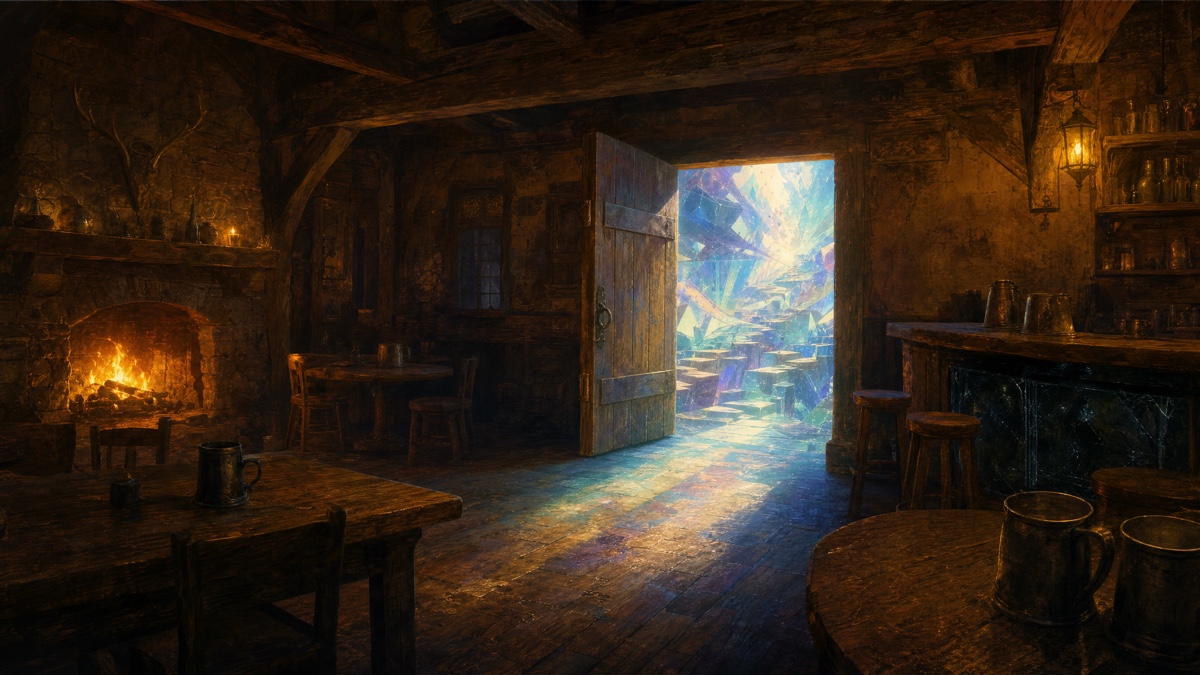
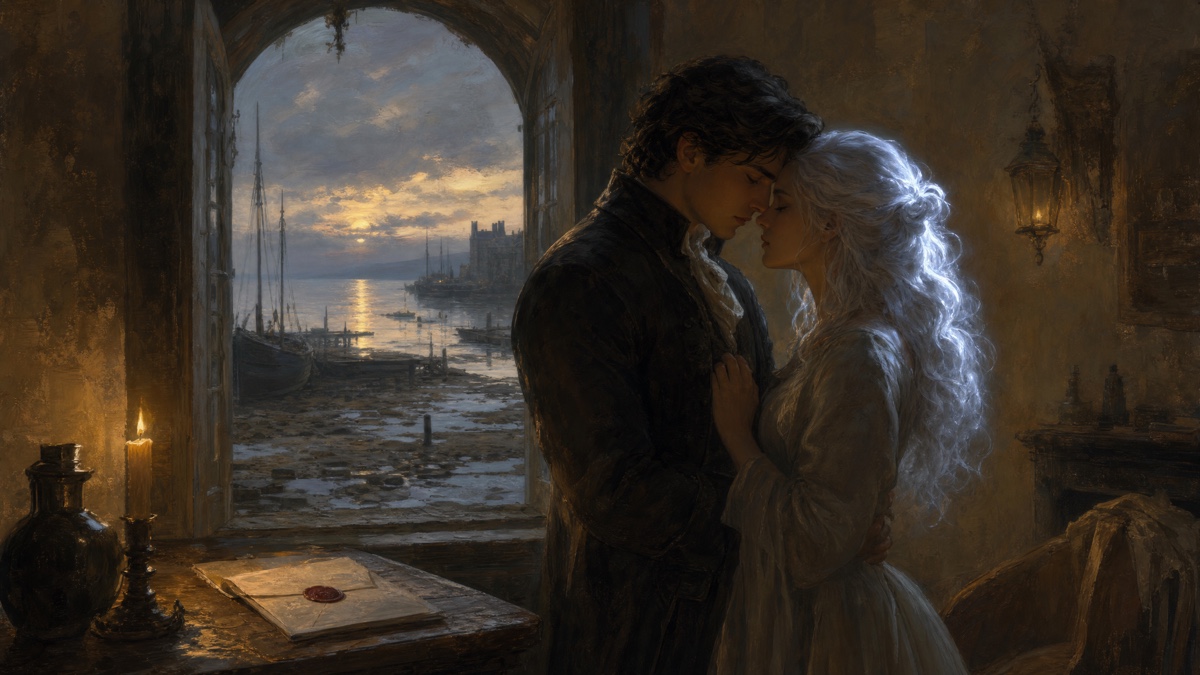
The Monroe-Whitmore estate sat on two hundred acres outside of Lewisburg, West Virginia, and it had been there so long that the land didn’t remember being anything else.
Thaddeus grew up in a house that breathed. Walls expanding in the morning, settling at night. Not just foundation sounds, but something deeper. Six generations of Monroe-Whitmores had been born, married, and died in those rooms, and the saturation had become structural. The house didn’t just hold memories. It was memories.
Thaddeus didn’t know this was unusual until he was twelve.
—-
His mother was Eleanor Monroe-Whitmore, born Eleanor Monroe, the name that mattered. The Monroes had been practitioners since before the term existed.
Eleanor would point out at dinner parties, casually and without apology, that their line’s founder had stolen his techniques from enslaved practitioners he owned. She mentioned it the way other people mentioned wine pairings. Watching who flinched.
Eleanor sat on Mudwick’s Board of Governors since Thaddeus was seven, disappearing four times a year for three-day meetings and returning smelling like old stone and institutional authority.
She was formidable in the way old-money women learn to be formidable. Not loud. Not aggressive. Just present in a room the way weather is present. You couldn’t ignore her. You could only decide how to respond.
Thaddeus loved his mother. He also couldn’t read the rooms she occupied. Wherever Eleanor stood, the space went quiet. Walled off so thoroughly that the house’s constant hum simply stopped around her, like a river parting around a stone.
His father was Gerald Whitmore, who’d taken the hyphenated name when he married Eleanor. Gerald managed the family’s finances. He was kind. Soft-spoken. Good with animals and children. He was also entirely non-magical. A mundane who’d married into the practitioner world and navigated it with the quiet competence of a man who understood he’d never fully belong.
“Your father can’t feel what we feel,” Eleanor told Thaddeus when he was eight. “That doesn’t make him less. It makes him rare. A man who chose to live in a world he can’t sense because he loved someone in it.”
Thaddeus thought that was the most romantic thing he’d ever heard. He still thinks so.
—-
The coal money was the thing nobody talked about.
The Monroe fortune came from two sources. Practitioner heritage, which meant access to saturated sites and accumulated generational power. And coal, which meant mountains opened and emptied and communities that existed to serve the extraction and disappeared when it moved on.
Thaddeus’s great-grandfather, Harlan Monroe, owned mines in McDowell County. At peak production, three thousand men worked his shafts, lived in company houses, bought from company stores, sent their children to company schools.
When the coal played out, Harlan Monroe moved on. Those three thousand men and their families stayed in a county with nothing left.
A photograph hung in the library: Harlan Monroe at a mine entrance, 1923. Behind him, a mountain that would be half gone by 1960. Thaddeus tried to feel something from it the way he felt things from other old objects in the house. He got nothing. Deliberate blankness. Someone had scrubbed it clean.
He asked his mother about it once.
“Your great-grandfather warded his personal effects,” she said. “He didn’t like being read.”
Thaddeus was ten. He accepted this and moved on. He wouldn’t circle back until later, when he understood that warding wasn’t just about privacy. It was about hiding what you’d done from the places that might remember.
—-
Thaddeus’s ability announced itself gently, which was appropriate for someone who did everything gently.
He was eleven at a family Christmas gathering. The estate filled with relatives, aunts and uncles and cousins he saw once a year, all practitioners of varying strength.
He was standing in the doorway of the great room when the room opened up to him.
Not the people. The room itself.
The space where six generations of Monroe-Whitmores had gathered for Christmas, had argued over turkey and reconciled over pie, had held newborns and mourned the dead and sung carols badly and fallen asleep on couches. A hundred years of family holidays layered into the floorboards and the crown molding and the stone fireplace that had been the heart of this room since the house was built.
The saturation hit him like walking into warm water.
Every surface held something. The dining table radiated decades of shared meals, the particular warmth of people breaking bread together. The fireplace mantel hummed with the accumulated weight of stockings hung and candles lit and photographs arranged and rearranged as the family grew. The window seat where his grandmother always sat carried her so specifically that Thaddeus could feel her presence even when she was across the room.
Not her emotions. Her impression on the place. The shape she’d worn into it by sitting there every Christmas for fifty years, the way a river wears a groove into stone. The house had learned the pattern of her, and it held that pattern the way a favorite chair holds the shape of its owner.
The whole room was alive with it. Not with people’s feelings but with what this space had become through a century of gathering. A place so saturated with togetherness that the walls themselves radiated welcome.
Thaddeus sat down on the floor in the doorway and cried. Not from sadness. From overwhelm. From the sudden understanding that a home wasn’t just a building. It was a living record of everyone who’d ever belonged there.
His mother found him. She crouched down, her expensive dress pooling on the hardwood floor.
“You feel it,” she said. Not a question.
“The room. It’s so full.”
“Connection,” she said. “That’s your affinity. Homes. Gathering places. The spaces where people come together.” She paused. “A Hearthwing gift. Like your grandmother. Like me.”
She almost smiled, and Eleanor Monroe-Whitmore almost never smiled, so it meant something.
“I feel it too. I learned to build walls a long time ago. You’ll learn. But let yourself feel it now. It won’t always be this loud.”
—-
After Christmas, Thaddeus read every room in the estate. The kitchen was densest, five generations of cooking saturating every surface, walking in like being hugged by the building itself. The study was cooler, layered with concentration and decision.
His father’s workshop in the barn was the surprise. Gerald Whitmore couldn’t sense saturation, couldn’t practice. But twenty years of a quiet man building birdhouses with focused, contented attention had created its own warmth. His father had saturated a space without knowing it was possible.
That taught Thaddeus something important. You didn’t have to be a practitioner to fill a place with meaning. You just had to show up and care, consistently, for a long time.
—-
The private school in Lewisburg had its own saturation. Thinner than the estate but readable. Thaddeus was good at being the nice kid. People liked him. Teachers praised his empathy.
But his empathy wasn’t what they thought.
Thaddeus didn’t read people. He read the spaces they’d made together. He could walk into a classroom and feel whether the students in it were a group or a collection of individuals. A space where people had bonded carried warmth that a space where people merely coexisted didn’t.
He could feel when a friendship group was fracturing because the places they gathered started losing their warmth. The place forgot the pattern before the people did.
His father said, “Be careful with what places tell you about people, Thad. The rooms remember, but they don’t always remember right.”
—-
His uncle Aldous frightened him.
Aldous Monroe did something important for the old families. Thaddeus’s mother never explained what, exactly. Just that Uncle Aldous traveled a lot, sat in meetings with serious people, and carried responsibilities that required discretion. But what Thaddeus sensed was simpler and worse.
Every room Aldous entered got colder.
Not dramatically. Not the bone-deep wrongness of a truly hollowed place. But the warmth that the estate held, that century of accumulated family life, dimmed when Aldous walked through. As though something in him was pulling at the saturation, thinning the rooms, leaving them slightly less full than they’d been a moment before.
“Uncle Aldous makes the house feel different,” Thaddeus told his mother when he was thirteen.
She looked at him sharply. “Different how?”
“Quieter. The rooms get thinner when he’s in them. Like he’s taking something.”
Eleanor paused. “Your uncle has given a great deal to the family’s work. More than most people know. It comes with costs.”
“What kind of costs?”
“The kind you don’t understand yet. And the kind I hope you never have to.”
She changed the subject. But Thaddeus had felt the estate shift when she said it. A quick chill in the study’s air, like a draft from a door that wasn’t open.
Fear. The room had tasted her fear and held it.
—-
The estate sat in coal country, which meant it sat surrounded by coal’s consequences.
When Thaddeus was fourteen, his mother began field trips to develop his ability, driving him to churches, courthouses, old homesteads to read their saturation. Standard Hearthwing training.
But getting there meant driving through McDowell County. Through Welch and War and Keystone and dozens of towns that barely qualified as towns. Past shuttered storefronts and empty lots and houses with caved roofs.
Thaddeus felt every one. Not the people who’d left. The spaces they’d abandoned. Every house was a home that had stopped being a home. The saturation of family life, of dinners and arguments and bedtime stories and morning coffee, was still there, but it was fraying. Thinning. Bleeding out slowly the way warmth bleeds from a house when the furnace dies.
The churches were worst. A church is a gathering place built on purpose, designed to hold the saturation of a community coming together in shared belief. When the community leaves, the church doesn’t just empty. It aches. Thaddeus could feel it in every abandoned sanctuary they passed, the particular pain of a place that was built for togetherness and now held nothing but the memory of it.
“Why does it feel like this?” he asked his mother, parked on a dead Main Street.
“Because people left. When communities dissolve, the places that held them start to die. The saturation bleeds out and nothing replaces it.”
“But why did they leave?”
“Because the work dried up. The coal.”
Thaddeus sat in the car and felt the hollow town pressing against him, and he thought about the photograph of his great-grandfather at the mine entrance. About company houses and company stores and three thousand families who’d built their lives around a mountain the Monroe family owned and emptied.
“Did we do this? Our family?”
His mother’s hands tightened on the steering wheel.
“Your family built businesses that employed thousands.”
“And then left.”
“Industries change, Thaddeus.”
“But we still have our house. And these people don’t have anything.”
Eleanor drove in silence. The hollow towns passed like ghosts.
“You have your grandmother’s eyes,” she said finally. “She saw things this clearly too. It made her difficult.”
“Am I difficult?”
“You’re asking questions I don’t have good answers for. That’s a difficult I’d rather you be.”
—-
The night before leaving for Mudwick, Thaddeus walked through the estate room by room. Feeling it the way he always had. A living thing made of accumulated connection.
He stopped in the library. Touched the glass over Harlan Monroe’s photograph. Pushed past the old, brittle ward.
Underneath, the space around the photograph held what his great-grandfather had left in it. Not an emotion exactly. A quality. The room near the photograph felt the way the abandoned mine entrances felt. Cold. Satisfied. The particular silence of a place that had been used up on purpose and discarded without regret.
Harlan Monroe had warded the photograph, but he couldn’t ward the wall behind it. And the wall remembered what kind of man had hung his portrait there.
Thaddeus pulled his hand back.
He went to his room. Packed his bag. Lay in bed listening to the house breathe, and for the first time in his life, the sound didn’t comfort him.
Because the house was built on coal money. And coal money was built on hollowed mountains and abandoned homes. And Thaddeus could feel what every room held, which meant he could also feel what had been taken from rooms like these, in towns like the ones he’d driven through, by people like the ones in his family photographs.
He left for Mudwick the next morning. His mother drove. His father waved from the front lawn. The house settled behind him, warm with everything it had ever held.
Thaddeus carried it with him. The love and the legacy and the photograph and the empty towns and the cold satisfaction baked into a library wall.
He carried it because that’s what Hearthwing students do. They carry what places hold. Even the things that hurt. Especially those.