Marcus Holloway’s grandmother was the last person in the family who mattered.
He didn’t mean that cruelly. It was just math. Genevieve Holloway had been somebody. Sat in rooms where decisions happened. Carried tokens that hummed with real power.
Marcus’s parents were the generation that spent what Genevieve built. His mother Karen taught piano and ran a catering business during the holidays. His father Douglas sold insurance and coached Little League with the steady cheerfulness of a man who’d made peace with being ordinary. They’d learned from Genevieve. Enough to function in the practitioner world. Not enough to matter in it.
The Holloway name still opened some doors. But the doors were getting smaller every year.
—-
Marcus was born in Richmond, Virginia, in a house his grandmother owned and his parents rented. That arrangement told you everything you needed to know about the family trajectory. Genevieve owned the real estate. Douglas wrote the checks. Karen pretended this was normal.
The house was old. Pre-Civil War. Saturated with the kind of layered Southern history that made Marcus’s skin crawl before he was old enough to understand why. The cellar had held people once. People whose names nobody recorded and whose saturation still pressed against the foundation stones. A persistent ache that never quite went away.
Marcus felt it from the time he was small. Not clearly. More like a low hum he couldn’t turn off. Background noise that was always there and always uncomfortable.
“You’re sensitive,” his grandmother told him when he was seven, after he refused to go into the cellar for the third time. “That’s the family gift. It skipped your father. Didn’t skip you.”
“What do I do with it?”
“Depends on whether you’re lazy or not.” She looked at him with those sharp eyes that wouldn’t always be sharp, though neither of them knew that yet. “The door is still open, Marcus. But doors don’t stay open forever.”
He didn’t know what she meant. He was seven.
—-
Marcus was lazy.
Not stupid. His grandmother was clear about the distinction. The Holloway gift for sensing was strong in him. Stronger than his father, possibly stronger than Genevieve herself, though she’d never say so.
But strength without effort was just potential. And Marcus Holloway was the king of unrealized potential.
He coasted through school. B’s when he could’ve gotten A’s. A’s when a B would’ve been the same amount of effort. Every report card said the same thing in different words. Marcus could do more if he tried.
He didn’t try because trying meant caring, and caring meant the possibility of loss. He’d figured that out young, watching his parents chase a lifestyle built on a name that was losing its currency. The harder they tried, the more obvious the gap between what they reached for and what they could grab.
Better not to reach. Better to sit in the middle where failure was impossible because success was never the goal.
His grandmother hated this about him. She told him so over the Sunday dinners she insisted on hosting in the formal dining room of the house she technically still owned.
“You have the Holloway gift and the Holloway curse,” she said, carving a roast with surgical precision. “The gift is sensitivity. The curse is thinking sensitivity is enough.”
“It’s been enough so far,” Marcus said.
“So far you’re fourteen and you’ve accomplished nothing. Wonderful standard.”
“Grandma.”
“Your great-great-grandfather sat in a room with Grover Cleveland. Your great-grandfather read the saturation at Normandy three days after D-Day and wrote a report that changed how we understand battlefield residue. I sat on the Southeastern Regional Council for eighteen years.” She set down the carving knife. “And you got a B in gym.”
“Gym’s harder than you’d think.”
“Everything is harder than you think, Marcus. That’s the whole point.” She set her napkin down and something in the movement was slower than it used to be. Her hands weren’t as steady as they’d been even a year ago. “The door is still open. But you have to walk through it. Nobody carries you.”
—-
The practitioner social circuit was where Marcus learned to perform.
His grandmother dragged him to gatherings starting at twelve. Uncomfortable clothes. Handshakes with people who were measuring whether the next generation was worth their time. Marcus learned pretty quick that when you can’t impress people with accomplishments, you impress them with personality. He got good at the quick smile, the easy laugh, the way of making anyone feel like the most interesting person in the room.
He also learned who was connected to whom. Which families were allied, which were feuding. He soaked up gossip like a sponge because gossip was information and information was the only currency the Holloways had left.
“You’d make a terrible practitioner and an excellent politician,” his grandmother told him after one gathering where Marcus had spent the whole night making a board member’s wife laugh until she forgot she was supposed to be networking.
“I’ll take that as a compliment.”
“It wasn’t one.”
—-
The Holloway name carried a specific kind of weight. Lighter than families like the Monroe-Whitmores. More precarious. The weight of people who used to belong and were slowly sliding out.
Marcus could feel it at every gathering.
The way certain families looked past his parents to Genevieve, because she was the one who still mattered. Invitations addressed to Mrs. Genevieve Holloway and Guest. His father standing at the edges of rooms with his hands in his pockets and his smile too wide.
Douglas Holloway was a decent man who sold insurance because the practitioner world didn’t have a spot for a mediocre sensitive with a good name. Marcus loved his father. Also pitied him, which was worse.
Pity is just love that’s given up.
His mother handled it differently. Karen managed Genevieve’s calendar. Coordinated the gatherings. Made sure everything looked right. She was performing. Marcus recognized it because he was performing too.
“We’re con artists,” he told his grandmother once. A moment of teenage honesty he immediately regretted.
Genevieve didn’t flinch. “We’re survivors. Con artists lie about what they are. Survivors lie about how bad things have gotten. The first is dishonest. The second is strategic.”
—-
Genevieve taught Marcus the stuff that actually mattered.
Not the formal practitioner curriculum. The underground knowledge. Old families had secrets. Every great house in the practitioner world was built on something it didn’t want examined. The pretty story about tradition and stewardship? Just a story.
“The old families run things,” she told him one Sunday afternoon, pruning roses with the focused attention she brought to everything. “Strip away the ceremony and tradition and it’s a business. The product is access. The customers are families with money. Everyone else is labor.”
“What does that make us?”
“Middle management. Too visible to ignore, too weak to matter.”
“That’s depressing.”
“That’s accurate. Depression is optional.”
She never told him everything. Genevieve was too careful for that. But she let things slip over the years, the way a woman who’d spent eighteen years on a regional council might if she wanted her grandson to know the shape of the world without carrying the blame for teaching him.
“Not everyone who goes in comes out the same,” she said once, sorting through old correspondence. “Some students just… fade. The ones without family connections. The ones nobody would make a fuss over.” She looked at him over her reading glasses. “Pay attention to who disappears quietly, Marcus. That tells you more about a place than anything in the brochure.”
He was fourteen. He didn’t fully understand. But the words lodged in him the way his grandmother intended. They’d surface later, when he needed them.
—-
Mudwick accepted Marcus the way it accepted all old-family kids with mediocre records and good names. Automatically. A seat had been held for a Holloway since the school’s founding.
His grandmother prepared him. Not with training. With information.
“The Monroe-Whitmores run the board,” she said. “Eleanor Monroe-Whitmore is the one who matters. Smart and careful. Her son Thaddeus will be there. Gentle kid. Genuinely kind. Could be useful, though he might be blind to what his family actually does.”
She gave him names, histories, the political map of a world Marcus was about to enter. She gave him tokens from the family collection too. Not powerful like the major families’ relics. But enough to get by.
Getting by. The Holloway specialty.
The night before he left, she called him into her study. It took her longer to get up from her chair than it used to. She’d lost weight that summer. Not the kind you lose on purpose. The kind that just leaves, quietly, like it’s got somewhere else to be. Her rings were loose on her fingers. Her voice was the same, though. The voice was always the same.
The study was full of important things. Letters from people whose names Marcus recognized. Tokens that hummed louder than anything else in the house. A leather journal she’d never let anyone touch.
“You’re going to see things at Mudwick that scare you,” she said. “You’ll learn what the families actually do. How this world really runs. And you’ll have to decide what kind of person you are.”
“What kind are you?”
“The kind that survived.” She paused. “I’m not proud of that. Survival isn’t a virtue. It’s just what’s left after you’ve made your compromises.”
She held out a small box. Inside was a pocket watch. Tarnished and old. It hummed with saturation Marcus could feel through the lid.
“Your great-grandfather’s. Carried it to Normandy. Carried it to every important reading he ever did. Most saturated object in this house.”
Marcus took it. Heavier than metal and glass should account for. He could feel something in it. Not courage exactly. Not fear. Something between them. The weight of a man who walked into consequential places and didn’t fold.
“Carry it,” she said. “And when the time comes, decide whether you’re the kind of Holloway who uses what he has or the kind who lets it sit in a box.”
She put her hand on his arm. Her grip was lighter than it should have been.
“The door is still open, Marcus.”
Third time she’d said it. He was starting to understand what she meant. Not a specific door. Not a specific opportunity. Just the idea that it wasn’t too late for him to become something other than what he’d been settling for. That the potential everyone kept pointing at could still turn into something real.
He also understood, standing in that study with her hand on his arm and her rings sliding on her thin fingers, that she might not be around to say it a fourth time.
—-
His parents drove him to the bus station. His father shook his hand and said something about making them proud. His mother hugged him and slipped a hundred dollars into his jacket.
Before he got out of the car, Karen turned around from the front seat.
“Your grandmother told you things. She tells you things she won’t tell your father because she thinks you’re strong enough to carry them.” She looked at him. “Whatever you see at that school, remember you don’t owe anyone your loyalty just because they share your name. Not the families. Not the school. Not even us. You figure out what’s right. Then you do that.”
Marcus nodded. Got out. Watched the car pull away.
His father waved through the window. His mother didn’t look back. Karen Holloway didn’t dwell. She managed.
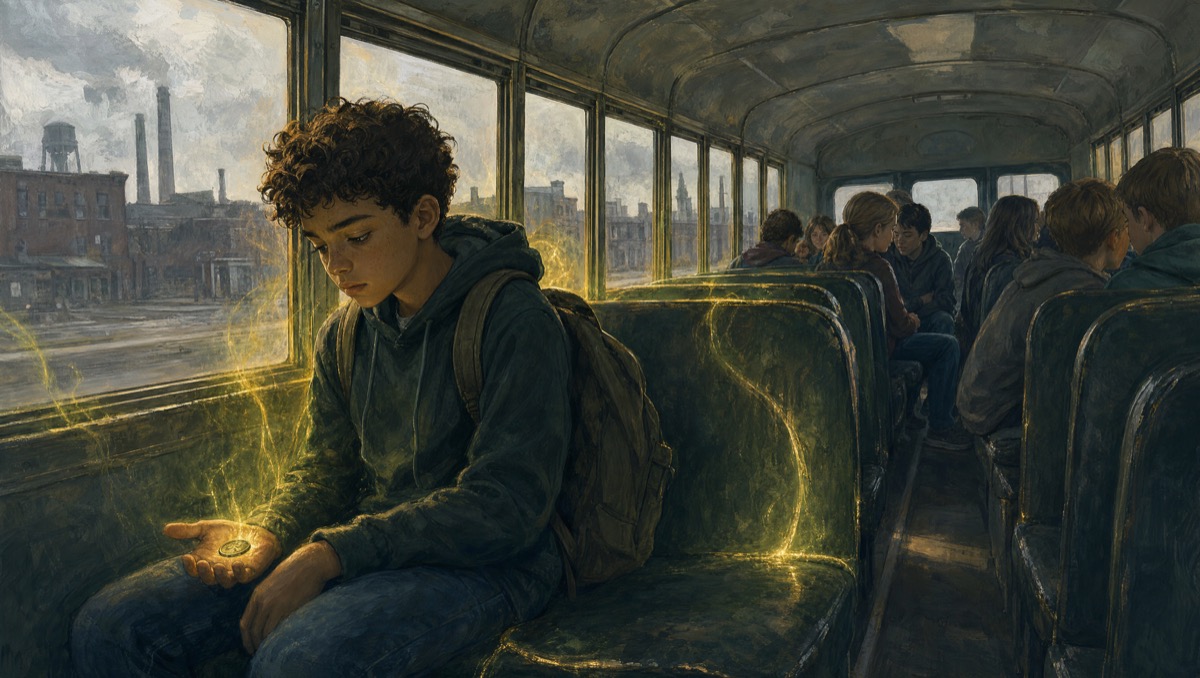
Marcus stood at the bus station with his two bags and his grandmother’s watch ticking in his pocket and the hundred dollars he’d spend too fast and the information he’d carry too long. He was going to fill his family’s seat the way Holloways filled everything. Partway. With charm. Taking up just enough space to be noticed and not enough to be held responsible.
Three generations of strategy.
It was about to stop working.