The night shift at Junction 7 was the kind of job nobody wanted and everybody needed done.
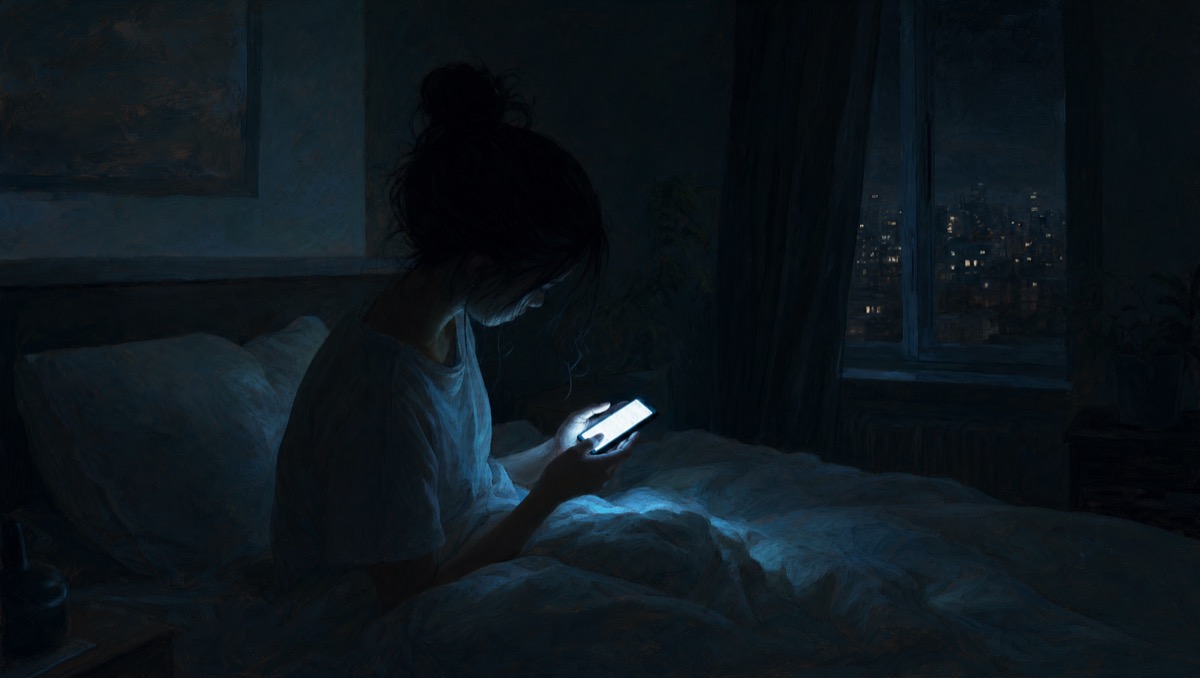
Twelve hours alone in a transit booth the size of a closet, monitoring portal traffic between Baltimore and three secondary nodes. Most nights nothing happened. The portals hummed. Travelers passed through. I logged arrivals and departures in a ledger that nobody would ever read.
My grandmother would have been ashamed to see me here.
She’d been a real practitioner. Trained before the war, back when the old families still took students from anywhere if they showed enough talent. She could read a room so thoroughly she’d know what happened there before the foundations were laid. Could draw courage or calm or focus from places most people walked right past without feeling a thing.
All I got from her was the compass.
It looked like junk.
Brass case gone green with age, glass face scratched and cloudy, needle that spun loose on its pin. A antique dealer would have given me maybe five dollars for it.
But the needle didn’t point north. It pointed toward saturation.
Swing it around a room and watch it twitch toward whatever spot held the most accumulated experience. In a hospital it would aim at the old surgical wing. In a school it would find the library. In my little transit booth it usually pointed at me, which said something depressing about how empty this place was.
I’d tried to be a real practitioner. Spent three years at a training program in Philadelphia before they suggested I might be happier in a support role.
That’s the polite way of saying I could sense saturation just fine but couldn’t do a damn thing with it. Like being able to smell a feast through a locked door.
So. Portal keeper. Night shift. Junction 7.
At least I had the compass to keep me company.
—-
The wisps showed up around 2 AM most nights.
They lived in the transit space, the between-place you passed through when you stepped into a portal here and came out somewhere else. Most travelers experienced that space as a blink. A moment of cold dissolution and then resolidification on the other end. Three seconds, maybe less.
But I sat next to it for twelve hours at a stretch. And after enough nights, you started seeing things at the edges.
Lights that moved wrong. Shapes that might have been faces if you looked too long. The wisps weren’t dangerous as long as you kept the paths clear and didn’t let travelers linger in transit. They were just there. Watching. Waiting for someone to get lost.
I’d learned not to look directly at them. Learned to check the transit readings without letting my eyes drift toward that shimmer at the periphery. The old keeper who trained me said the wisps could pull you off course if you gave them your attention. Send you somewhere you didn’t intend to go.
I believed him. I’d seen the logs from keepers who got careless. Travelers arriving at the wrong junction. Or not arriving at all.
—-
The compass started acting strange in October.
I noticed it during a slow Thursday shift. No traffic for hours, just me and the hum of the portals and the scratch of my pen in the ledger. I pulled out the compass to pass the time, watching the needle drift lazily toward my chest the way it always did.
Except it didn’t.
The needle swung past me. Pointed at the east wall of the booth. Held steady.
I turned around. The wall was concrete block painted institutional green. Nothing special. Nothing that should register on a saturation compass at all.
I tapped the glass. The needle didn’t move.
I stood up and walked to the opposite corner of the booth. The needle followed the wall. Not me. The wall.
There was nothing behind that wall except maintenance corridors and then bedrock. I’d seen the blueprints. Junction 7 was carved into a hillside outside the city, deep enough that the transit energies wouldn’t bleed into populated areas.
I put the compass away and tried to forget about it.
—-
It happened again the next night. And the night after that.
By November I’d mapped the pattern. The compass pointed at the east wall from about 1 AM to 4 AM. Before and after those hours, it behaved normally. Pointed at me, or at whatever traveler was passing through, or at the portals themselves when they were active.
But during those three hours, something in that wall pulled stronger than anything else in the junction.
I started staying late. Lingering after my shift ended, watching the needle slowly drift away from the wall as dawn approached. Whatever was back there, it had a schedule. It woke up in the deep night and went quiet again before morning.
I should have reported it. Should have filed a maintenance request or contacted the regional office or done any of the things a responsible keeper would do when their equipment started detecting something impossible.
I didn’t.
My grandmother’s compass had never been wrong. And I wanted to know what it had found.
—-
December. Two days before Christmas. Snow falling outside in fat wet flakes that would turn to slush by morning.
I brought a flashlight and a crowbar.
The maintenance corridor behind my booth was exactly what the blueprints showed. Concrete walls, exposed pipes, the smell of old dust and machine oil. I walked the length of it twice before I found what I was looking for.
A door. Set into the wall at the far end of the corridor, half-hidden behind a stack of old transit equipment that looked like it hadn’t been moved in decades.
The door wasn’t on any blueprint I’d seen.
I held up the compass. The needle pointed straight at it, quivering with intensity.
The lock was old. The crowbar made short work of it.
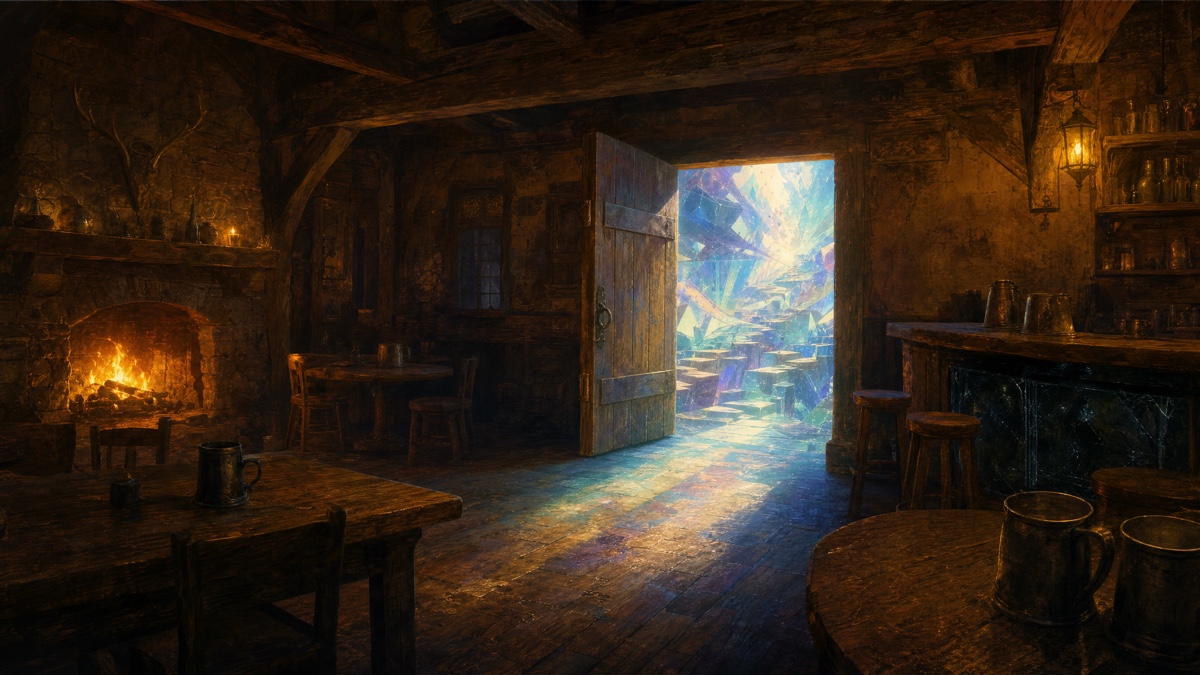
Behind the door was a staircase going down. The air that came up from below was cold and tasted like stone and something else. Something electric. The way the air tastes right before a portal opens.
I should have stopped there. Gone back to my booth. Filed a report like a sane person.
But my grandmother had spent her whole life walking into rooms that scared her because she wanted to know what they held. And I was her granddaughter even if I’d never be the practitioner she was.
I went down.
The stairs ended in a chamber. Rough-hewn rock walls, nothing like the clean concrete above. This space was old. Older than Junction 7. Older than the transit network. Maybe older than the country itself.
And in the center of the chamber, a portal.
Not one of ours. Not the regulated, documented, carefully maintained connections that I spent my nights monitoring. This was something else. A tear in the air that shimmered with colors I didn’t have names for. The wisps I’d been trained to avoid were everywhere down here, drifting around the portal’s edges like moths around a flame.
The compass needle spun in circles. Too much saturation. Too much of everything.
I stood at the bottom of the stairs and watched the portal breathe. Because that’s what it was doing. Expanding and contracting in a slow rhythm, like something alive and sleeping.
Whatever this was, someone had built Junction 7 on top of it. Had buried it under concrete and bureaucracy and pretended it didn’t exist. But it was still here. Still waiting.
The wisps turned toward me. Dozens of them. Hundreds maybe. Their attention felt like pressure against my skin.
I left. Climbed back up the stairs, closed the door, shoved the equipment back in front of it. Went back to my booth and sat there shaking until my shift ended.
—-
I’ve worked at Junction 7 for three more years since that night.
I’ve never gone back down those stairs. Never filed a report. Never told anyone what I found.
But I check the compass every night. Watch the needle point at that wall during the deep hours, tracking whatever moves on the other side. The portal is still there. Still breathing. Still waiting for something I don’t understand.
My grandmother would have investigated. Would have researched and consulted and eventually figured out what that place was and why it mattered.
I’m not her. I’m just a keeper. I watch the portals and log the travelers and make sure nobody gets lost in transit.
But I keep the compass on my desk where I can see it. And sometimes, when the needle swings toward that wall, I wonder what would happen if I went down there again. If I stepped through that ancient portal and let the wisps take me wherever they wanted to go.
Probably nowhere good.
But my grandmother’s compass has never been wrong. And it keeps pointing at that door like it’s trying to tell me something.
One of these nights, I might finally listen.